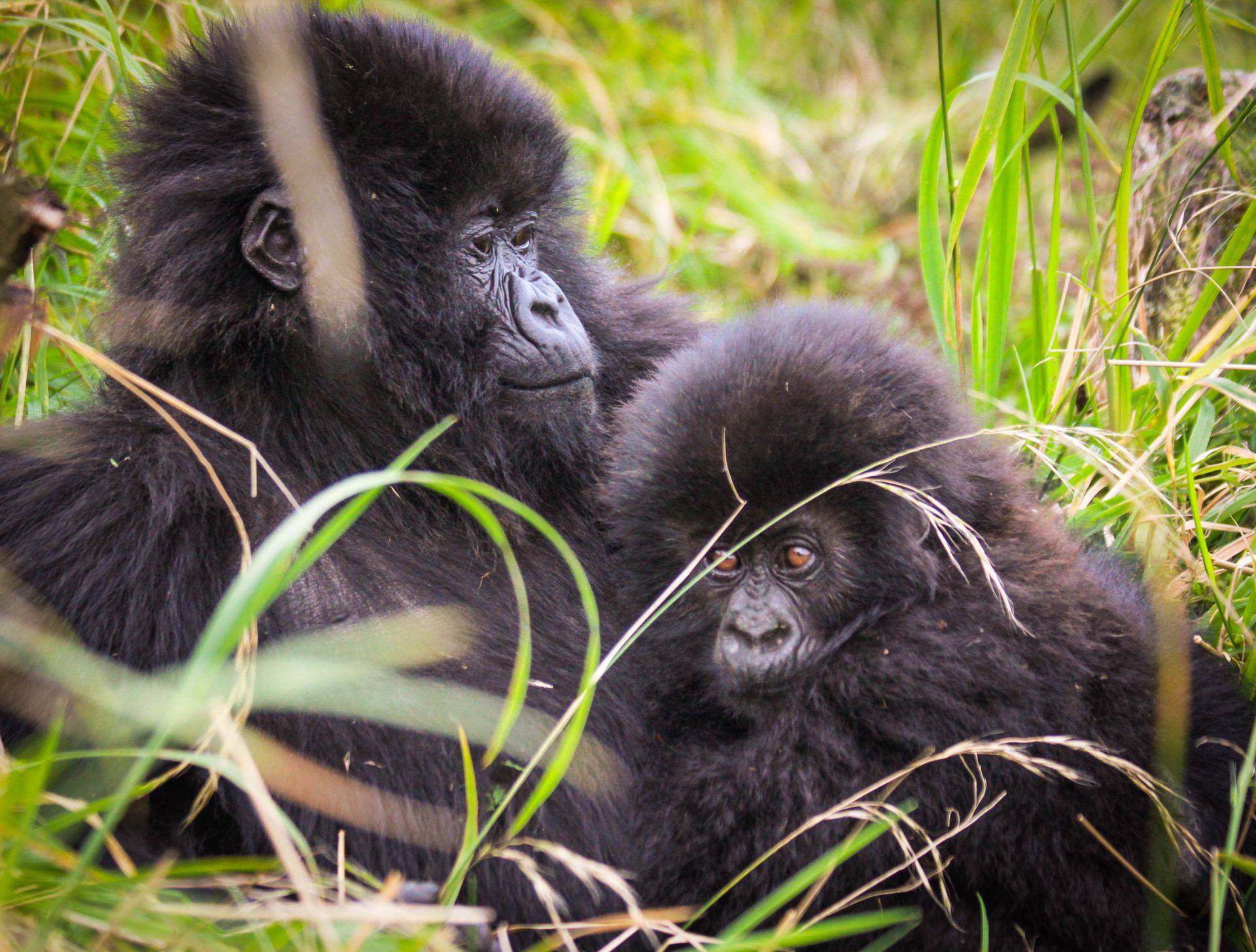
Scientifically known as “Pan Troglodytes”, Chimpanzees are one of Africa’s most popular wildlife species. There are currently four unique sub-populations of Chimpanzees that include the Central Chimpanzees, western Chimpanzees, Nigeria-Cameroon Chimpanzees and the Eastern Chimpanzees. These Great Apes share at least 98.7% of their genes (DNA) with humans and characterized by long arms (about 1.5 times their height and stretch beyond their knees), huge bodies with short legs, no tails, opposable thumbs, long dark hair as well as bare face, fingers, toes and ears.
A fully mature chimpanzee weighs between 25 and 70 kilograms with a life span of up to 50 years. Chimpanzees are omnivorous and having known such details about these Great Apes, the question now is “where do they live?”
These fascinating Great Apes have the wildest and most interesting geographical distribution than any other great ape species. They live discontinuously from the southern part of Senegal within the lush forested belt, north of River Congo to the western part of Uganda, South-western Rwanda, in Burundi as well as western side of Tanzania. Gombe National Park of Tanzania was the first Protected Area in Africa set aside for sheltering the endangered Chimpanzees.
Uganda.
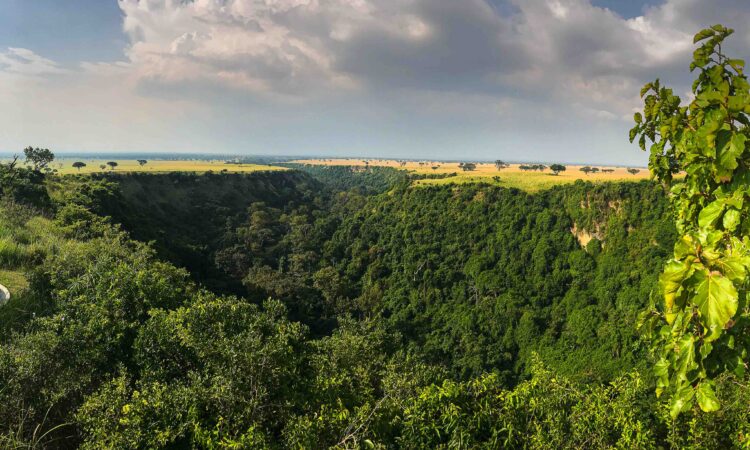
In Uganda, chimpanzees are found within Kibale Forest National Park which hosts over 1500 of the country’s 5000 chimpanzees. Other places to see them are Budongo Forest (in Murchison falls National Park), Kyambura Gorge (in Queen Elizabeth National Park), Kalinzu Forest and Semliki National Park.
Chimpanzees typically occupy a wide range of habitats ranging from the lush Tropical rainforest, Montane rainforests at elevations of up to 3000 meters above sea level, thick forests, wetlands, less forested savannah Mosaics as well as dry savannah grasslands and woodlands. These Great Apes occupy the greatest concentrations within the verdant rainforests of what used to be the Tropical rainforest belt. However, the high rate of deforestation in the African Continent has gotten rid of the belt, leaving only fragmented patches of forest where it once existed.
They also live within the secondary re-growth forests, open woodlands, the Bamboo forests, wetland forests as well as open savannah with belts of Riverine forest and forest savannah mosaic. Even in the savannah areas where chimpanzees are found, they rarely enter far into the savannah, only for hopping from one forest patch to the next.
Tanzania.
Gombe National Park in western Tanzania where the popular Jane Goodall Institute has spent many years studying chimpanzees is a combination of dense riverine forest in most valleys, woodland, open areas on peaks and ridges among others.
Chimpanzees require plenty and constant supply of water as well as different species of fruits. They are primarily omnivorous with their diet mainly comprising of leaves, honey, buds, fruits, seeds and nuts as well as insects (especially termites) and sometimes meat of small or medium-sized animals.
Chimpanzees are categorized into different species that include the western chimpanzees (Pan troglodytes verus) found in west African countries of Benin, Sierra Leone, Togo, Liberia, Ghana, Senegal, Guinea-Bissau, Mali and Cote d’Ivoire. Their population stands at 18,000 to 65,000 individuals.
Eastern chimpanzees (Pan troglodytes schweinfurthii) also known as the long-haired chimpanzees are found in western Uganda, Central African Republic, Burundi, the Democratic Republic of Congo, Rwanda and Western Tanzania. Their total population presently stands at 181,000 to 250,000 individuals.
The Nigeria-Cameroon Chimpanzees (Pan troglodytes ellioti) dwell across the borders of Cameroon and Nigeria. Their population ranges between 6000 and 9000 individuals.
West and central Africa.
Central Chimpanzees (Pan Troglodytes troglodytes) also referred to as the black-faced chimpanzees are found within the Congo River of the Democratic Republic of Congo, Cameroon, Republic of Congo and Gabon.
There are currently over 140,000 Central chimpanzees in the mentioned places. All the four sub-species are classified as “endangered” under IUCN Red List.