What do gorillas look like? This is a common question among travelers that have never encountered gorillas, hence might be mistaken for other great apes especially chimpanzees or bonobos. However, this article answers the question of how gorillas look like.
There are two main species of gorillas – Eastern gorillas which are further sub-divided into Mountain gorillas (Gorilla beringei beringei) and Eastern lowland gorillas (Gorilla beringei graueri) as well as the stunning western gorillas that are also sub-divided into the popular western lowland gorillas (Gorilla gorilla gorilla) and exceptional Cross River Gorillas (Gorilla gorilla diehli).
Size.
When it comes to size, Gorillas are the largest, most powerful and very stocky of all Great Apes species and occupy the Equatorial rainforests of East, Central and West Africa. An adult mountain gorilla weighs between 95 and 220 kilograms. The Eastern lowland gorillas weigh from 80 to 220 kilograms. Western lowland gorillas weigh from 72 kilograms (for females) to 170 kilograms (for males) while the average weight of the Cross River gorillas is around 180 kilograms for males.
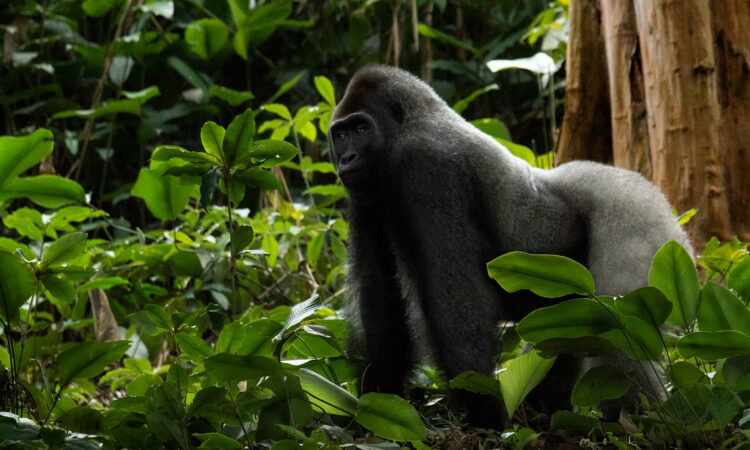
All in all, the Eastern gorillas are larger than their western counterparts but both species of gorillas have big nostrils and protruding brow ridge. The males are usually larger (twice) than females and have heights of 1.7 meters (5.5 feet) tall.
Skin color.
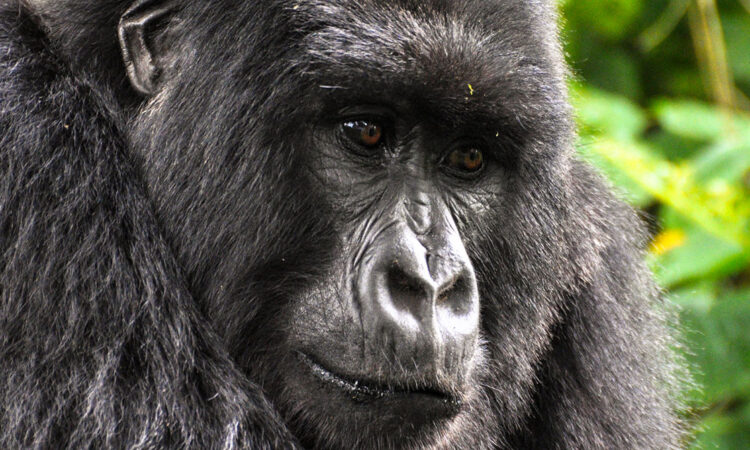
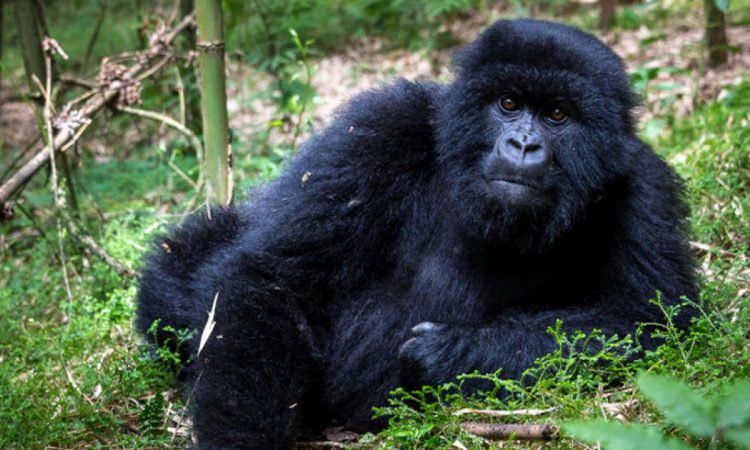
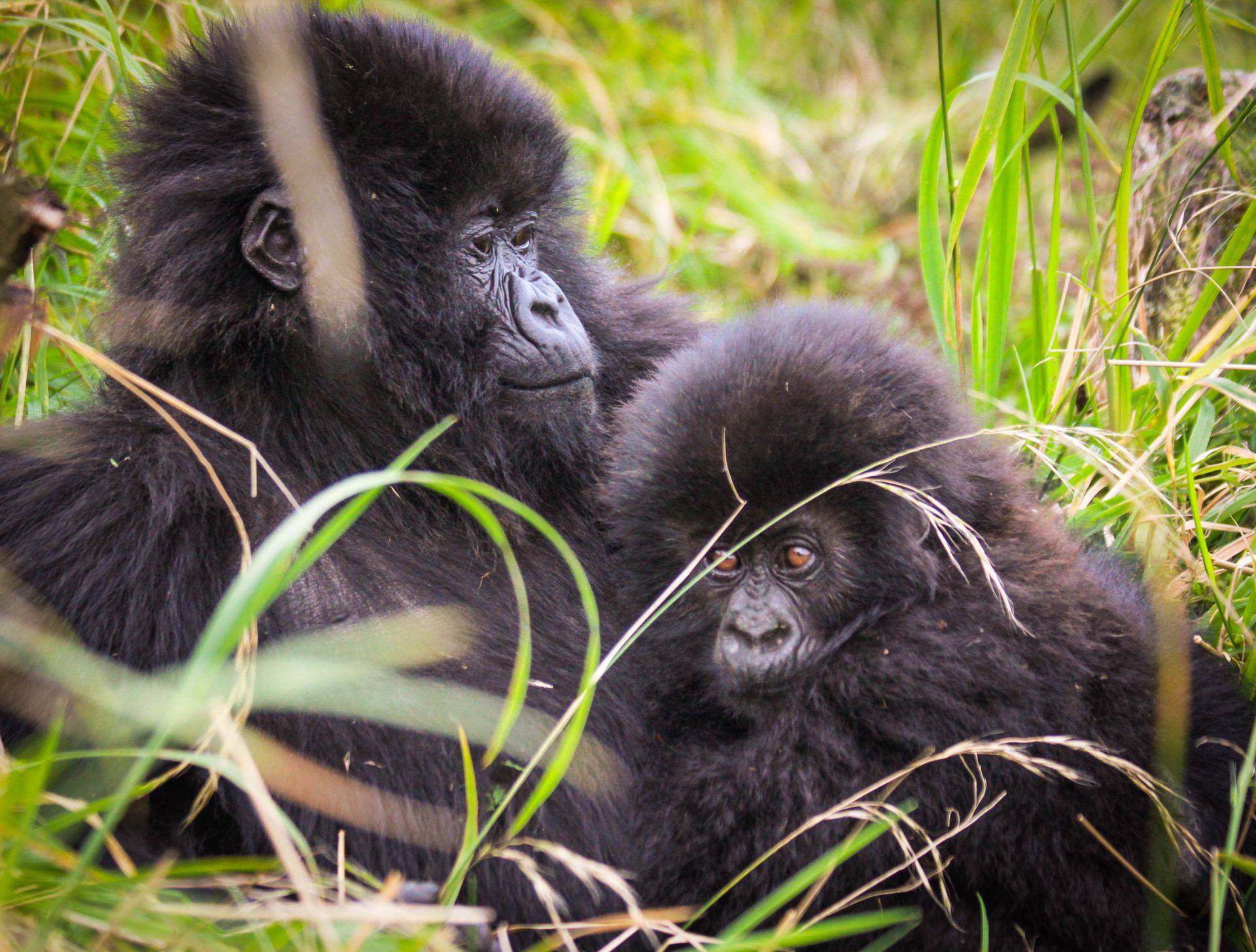
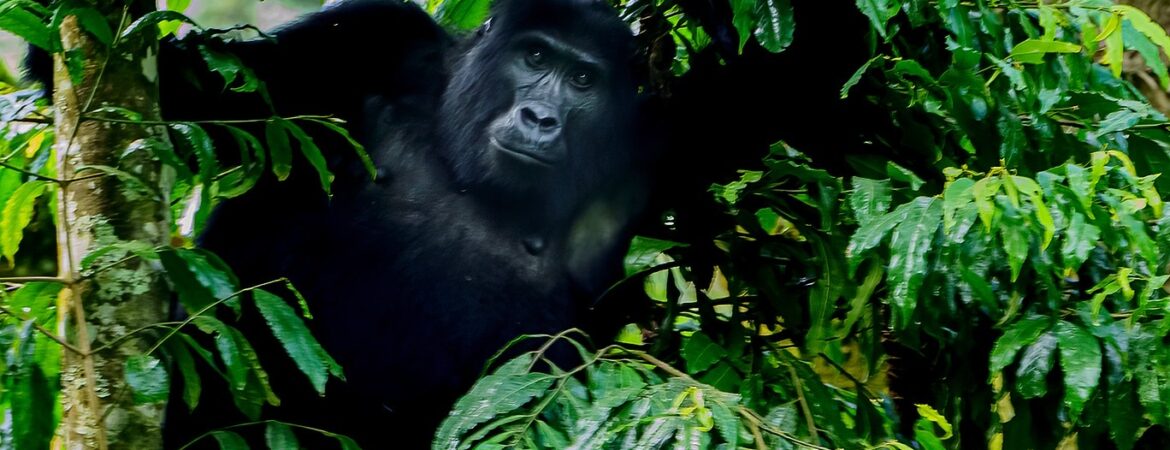
All Gorilla species have dark skin and hair, their faces are also black and hairless, with small eyes that are close to each other. Adult male gorillas also have clear crests on top of their skulls as well as saddle of silver-grey hairs on their lower backs to hips on reaching sexual maturity. It is from this silver-grey color of adult male gorillas that they earned the name “silverback”.
When gorillas reach adulthood, they lose hair on their nose, fingers, ears, palms, chests, lips and soles. Mountain gorillas have longer, darker and silkier hair because of their natural environment.
Body shape.
Gorillas feature beautiful shapes, with their bellies being larger than their chests. This is mainly attributed to their enlarged intestines that digest the bulky vegetation they eat.
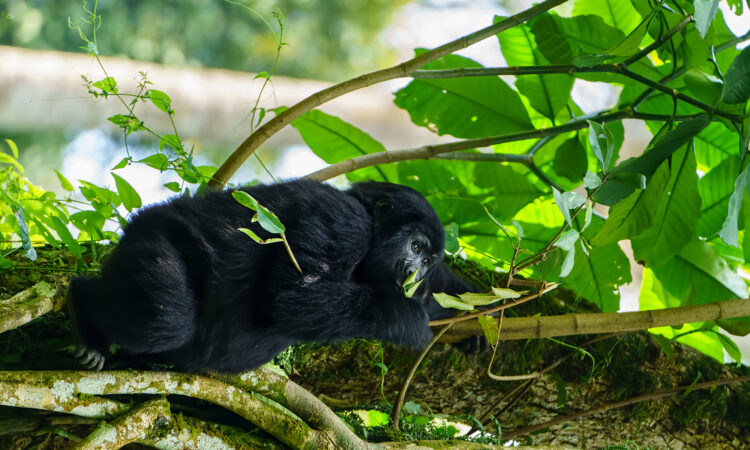
These Great Apes can consume between 18 and 30 kilograms of vegetation (plant leaves, stems, roots, barks, fruits and shoots) each day.
Dentition.
Gorillas are characterized by 32 teeth, just like humans and their teeth are strong for the coarse vegetation they consume. Male gorillas develop sharp and big canines at they mature. Two full sets of teeth are developed during their lifetime, with the first set known as baby teeth being lost at some point and being replaced by the permanent set until adulthood.
Hands and arms.
Gorillas have bigger arm muscles than in the legs, which is opposite to humans. This is mainly because gorillas utilize their tremendous arm strength to bend, gather vegetation and for defense purposes. Much as they are capable of standing and walking upright on two feet, gorillas mainly walk on four limbs (quadruped). Besides the strength, their arms are also twice longer than their legs, extending for about 30 centimeters.
This also makes their arms longer than that of adult human beings and this shows their tree-dwelling ancestry. However, gorillas are not primarily terrestrial (dwell on the ground). Generally, the upper body strength of adult gorillas is 6 times more powerful than that of an adult man, making it possible to break, squeeze and lift heavy and large objects.
Gorillas don’t have tails and their nose regions are different in terms of shape and wrinkles. Adult male gorillas also possess apocrine (or scent) glands in their armpits that secret bad odor when stressed or excited. Their eccrine or sweat glands lubricate palms of their hands as well as soles of their feet.
Hands and Feet.
Gorillas don’t have claws but rather fingernails and toenails that are used for scraping, opening, scratching and cleaning. They also have big toes and thumbs that oppose other digits (toes and fingers) allowing them to manipulate and grasp objects.