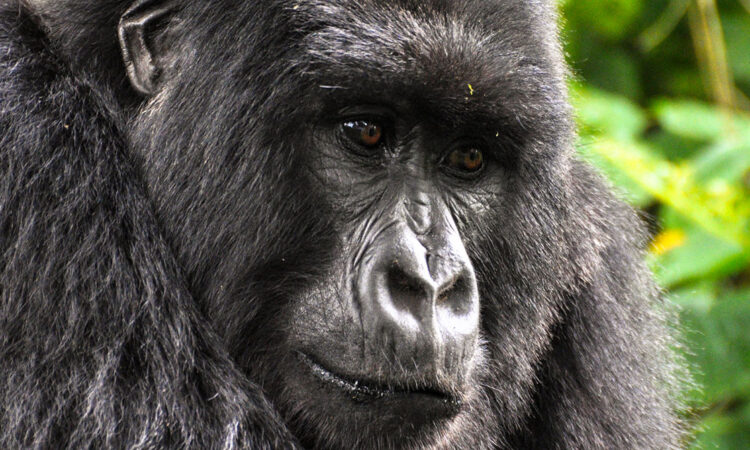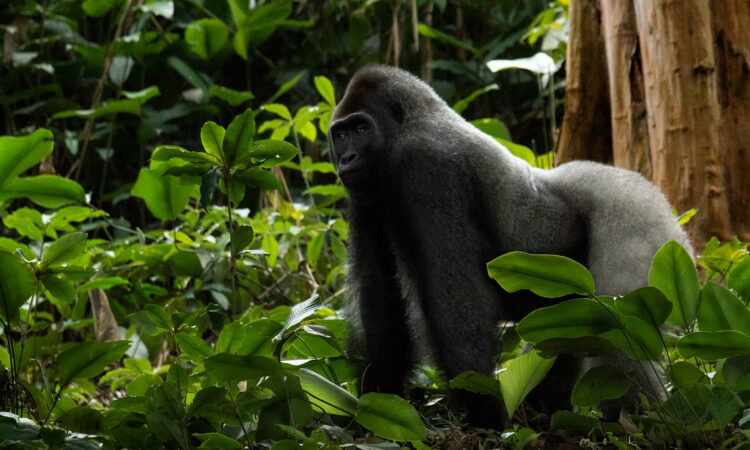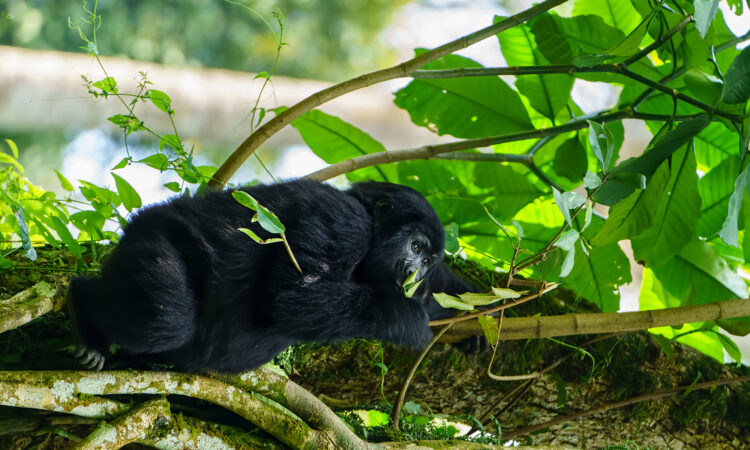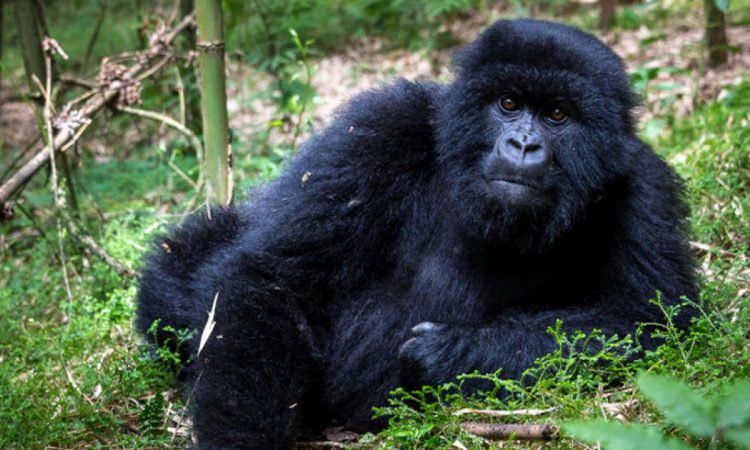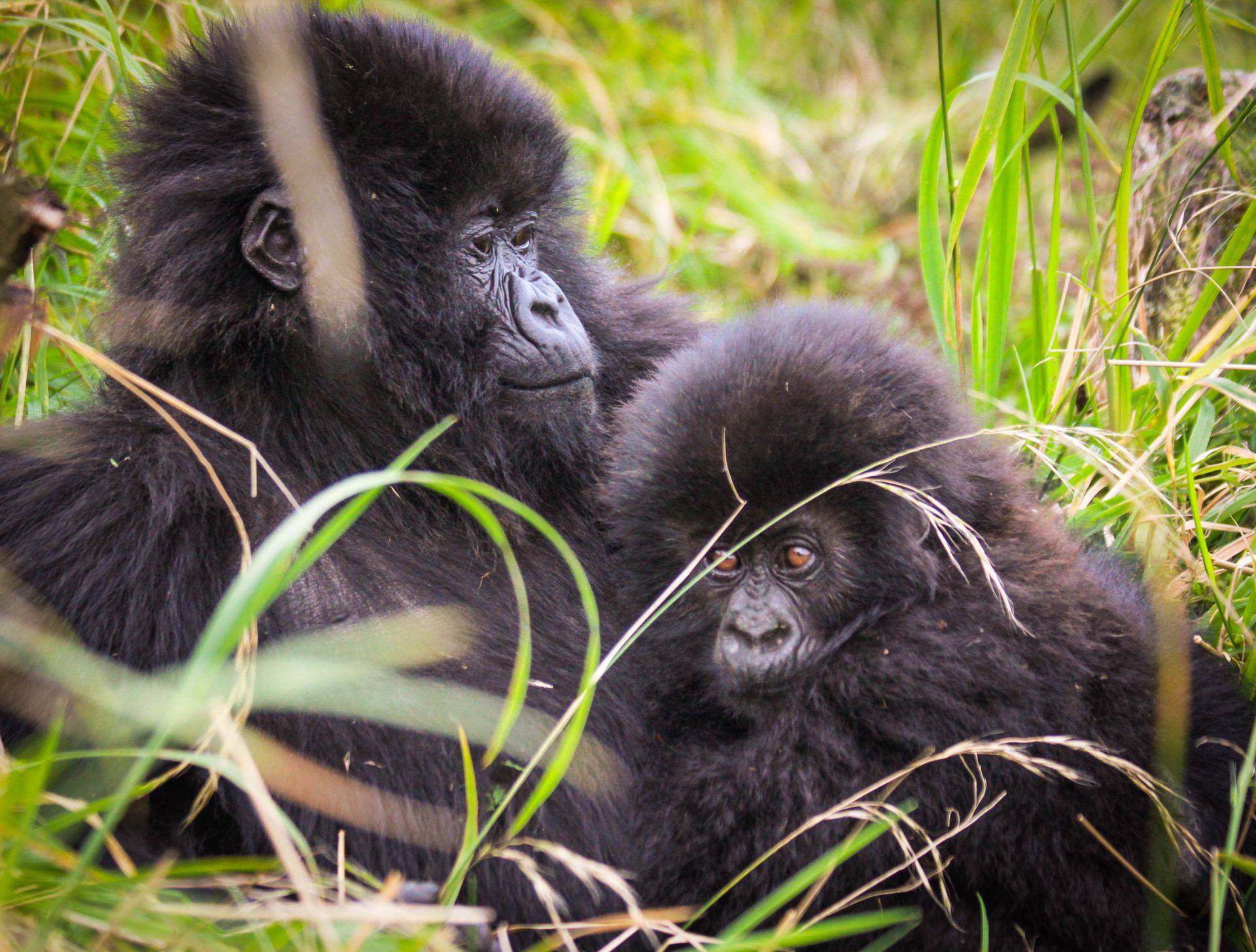
When you come across mountain gorillas in the jungles, you will be left to think that these apes can’t be threatened considering their massive bodies. But the fact is that, these primates have predators that threaten them in their natural habitat. Naturally, mountain gorillas are intelligent, social yet also emotional. These great apes resemble to humans considering 98% of their DNA that is shared with these rare creatures.
Though mountain gorillas are humble, their survival still remains threatened yet they are a few creatures with low production rate. In their habitat, they encounter some predators including crocodiles, leopards that usually kill them and these target their babies.
Humans.
On the other hand, humans have also become threatening factor because of the numerous activities. Humans have continuously encroached gorilla environment for various reasons including farming, illegal hunting or poaching, wars and these have contributed to loss of these apes’ habitat.
Humans are threat to mountain gorillas since they are capable of spreading infectious diseases. These primates aren’t safe because they share at least 98% of their genetic DNA with humans. Climate change has also proven to be a main threatening factor to mountain gorilla habitat and this is largely caused by human activities.
The Leopards.
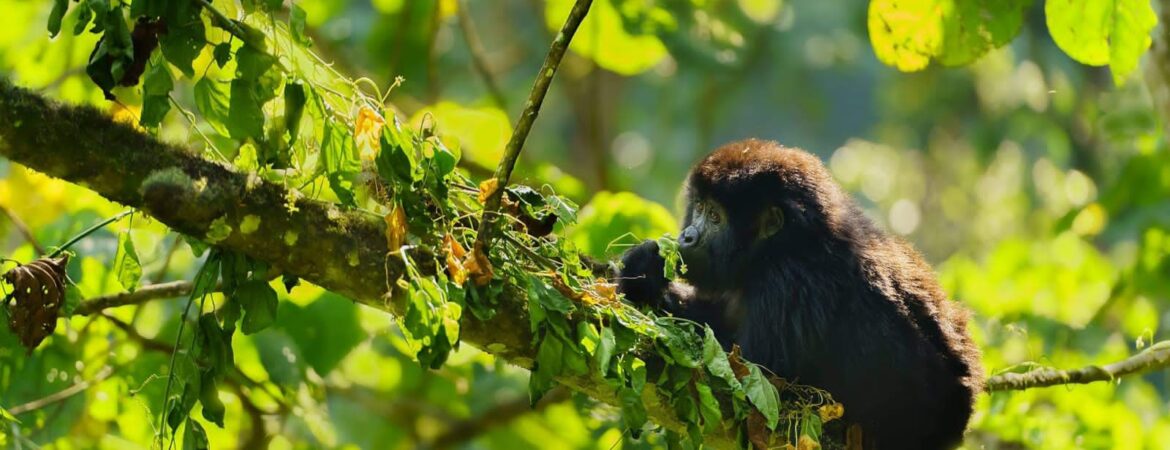
Leopards are considerably the main predators to mountain gorillas in their natural habitat. Leopards are smart and being carnivorous animals, they are capable of killing a grown up mountain gorilla. They also have ability to climb the tree which makes safety of mountain gorillas hard even when they try to seek safety up the trees.
Usually, leopards target the young and not the mature adult silverbacks. But they can hunt down the Western lowlands.
Crocodiles.
Crocodiles are among the mountain gorilla predators. They wait for gorillas around the water banks and they lay an attack on them when to confine to drink water though mountain gorillas rarely drink water. At times, the crocodiles can wait for gorillas in wetlands.
Interestingly, mountain gorillas (Gorilla beringei beringei) have defensive skills. As soon as a predator is detected, mountain gorillas can alert others of danger. The family members collect around their leader/dominant silverback whose duty is to protect others from such dangers.
Females together with males can build strong ties and this is how they can defend themselves from the enemies. Where the intruder fails to vacate, the dominant silverback is capable of confronting him. If the black backs exist in the gorilla group, they can lead the rest off from the predators or even attack the enemy collectively.
It is noted that mountain gorillas like other gorilla species live in families or groups. Each of the gorilla can comprise of up to 2 to 40 members although the composition usually fluctuates due to certain factors such as death, family breaks-one reason why new families/groups are created. In very group, there is a dominant silverback and other members especially babies/infants, sub-adults, females.
Mountain gorillas are rare and only available for trekking in Uganda, Rwanda and Democratic Republic of the Congo (DRC). There are only 4 places where mountain gorilla holidays can be arranged and they include 2 in Uganda; Mgahinga Gorilla National Park (MGNP) Kisoro district, Bwindi Impenetrable National Park (BINP). The other 2 parks include Virunga National Park Congo in Central Africa, Volcanoes National Park Musanze in Rwanda.
Trekking mountain gorillas requires all holidaymakers to present a valid gorilla permits and the prices are not the same. In Uganda, you should be prepared with US Dollar 700 to book for a gorilla permit, US $1500 for Rwanda gorilla permits and US $450 for the Congo permits.