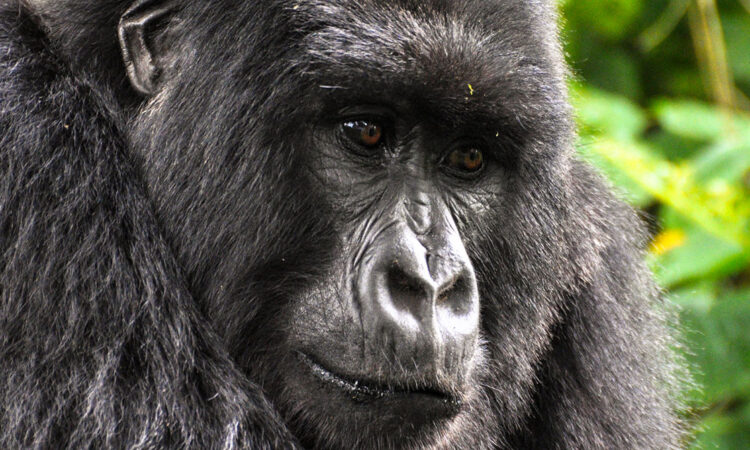
Gorillas are the most popular Great Apes, with stocky bodies, broad chests and shoulders. They are renowned for their human-like emotions and behavior, given the fact that they share over 98% of their DNA with humans. Gorillas are therefore the closest cousins to humans after chimpanzees as well as bonobos. Below are some of the interesting facts about gorillas;
Gorilla Species.
There are two gorilla species-the Eastern gorillas sub-divided into the Eastern lowland gorillas only in the Democratic Republic of Congo as well as mountain gorillas in Bwindi Forest, Volcanoes, Virunga and Mgahinga Gorilla National Parks.
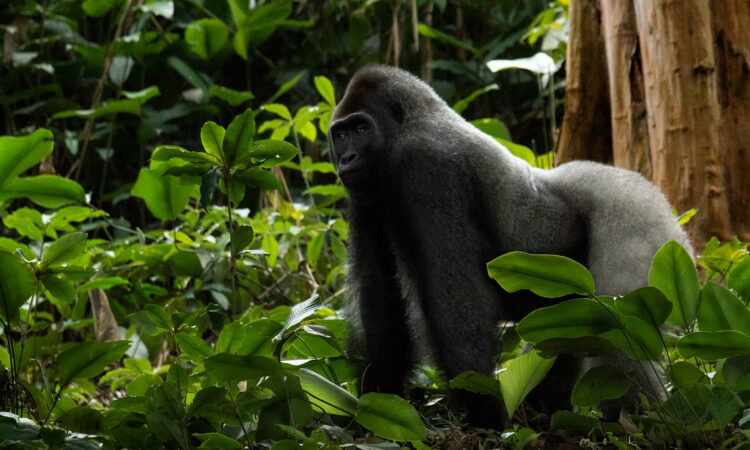
There are also the western gorillas that are divided into the Cross River Gorillas on the Nigerian-Cameroonian border as well as the Western lowland Gorillas of West Africa. Of these four gorilla sub-species, the Cross River are the rarest with fewer than 300 individuals scattered across Cameroon and Nigeria while the western lowland gorillas are the most common.
Social Structure.
Gorillas live in fairly stable social groups with dominant silverback, subordinate silverbacks, numerous adult females, black backs, juveniles and infants. When males reach sexual maturity, they leave natal groups to form their own groups-peacefully and sometimes forcefully while taking some members of the family as well.
Gorilla Habitats.
Gorillas in the wild are only found in Africa and are distributed across Western, East and Central Africa. The Eastern lowland gorillas have a population of about 3000 individuals and occupy the lowland rainforests and are only found in Eastern Democratic Republic of Congo; Kahuzi-Biega National Park, Maiko National Park and Itombwe Mountains.
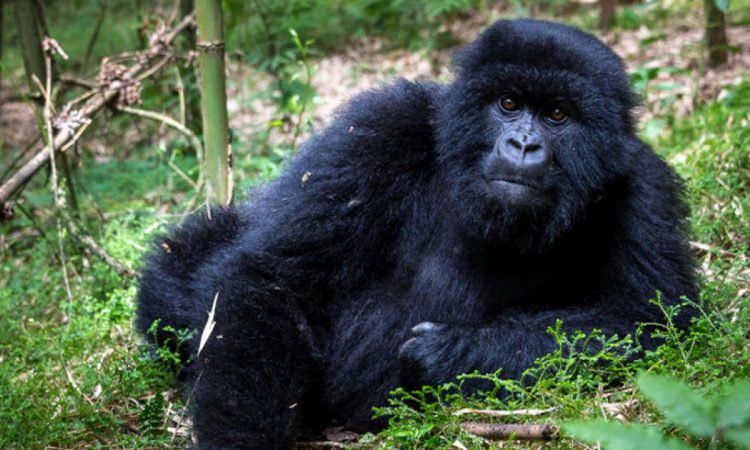
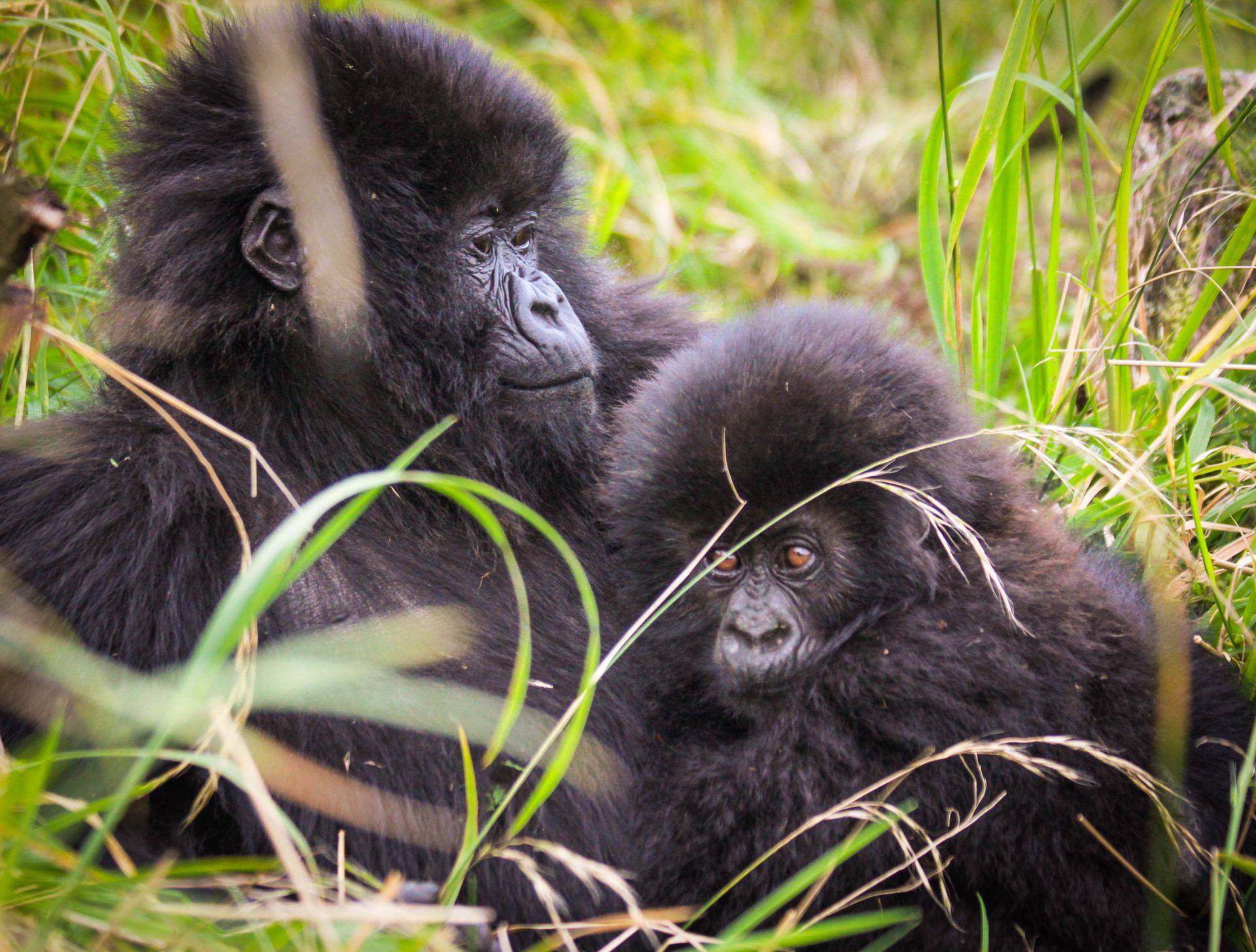
Mountain Gorillas live in dense forests high on the mountains with altitude of 2500 to 4500 meters above sea level. They can be found in two different locations-the foothills of the Virunga Mountains of Mgahinga Gorilla National Park in Uganda, Volcanoes National Park in Rwanda as well as Virunga National Park of Democratic Republic of Congo. The world population of these gorillas currently stands at about 1063 individuals.
The Cross River Gorillas like their name occupy the River basins in Nigeria and Cameroon only. There are only 300 in the wild and are the shyest because they live in remote areas rarely occupied by humans and are found within elevations of 1500 to 3500 meters above sea level.
The western lowland Gorillas are the most widespread gorilla sub-species composed of between 150,000 and 250,000 individuals in the wild. They occupy the lowland tropical rainforests, wetland areas and riparian forests of Equatorial Guinea, Angola, Central African Republic and Cameroon.
Gorilla Diet.
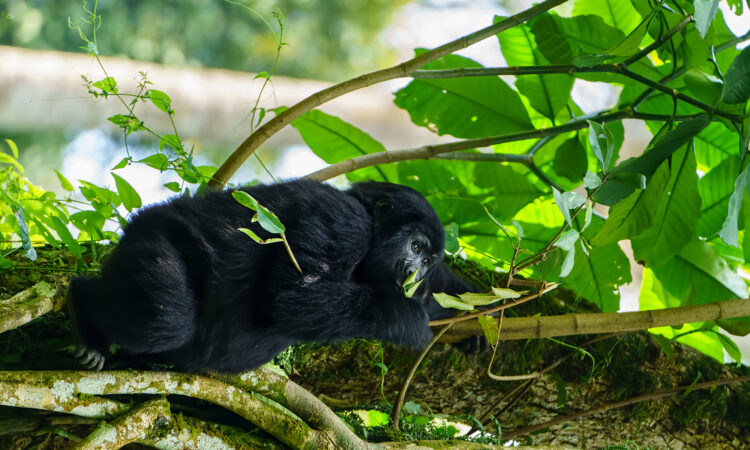
All the four gorilla sub-species are herbivores with their menu mainly comprising of organic fruits, tree barks, flowers, leaves, stems and bamboo shoots. They sometimes enjoy invertebrates and small insects like snails, termites, Ants and Termites. Because gorilla diet is made up of succulent food, they rarely drink water and it is difficult to find them around a water source.
A mature gorilla can consume between 18 and 30 kilograms of food each day to keep strong and healthy. Fruits are the most preferred among the Eastern lowland and western lowland gorillas, making them move long distances to find fruits.
Gorilla Communication.
Gorillas communicate in different ways and every activity/circumstance calls for a particular communication tool/method. Grunting and barking is used to get the attention of other gorillas while screaming and roaring is used to alert other members of potential threat in their territory. In case of conflicts with other wild unhabituated gorillas or when a predator is sighted, the silverback alerts other members of the group to run for safety.
Gorillas also belch and rumble as a sign of satisfaction especially after breastfeeding an infant. Communication can be vocal or just visual. For instance when a fight happens among group members, it is resolved by showing nine steps to bring it to an end and these include hooting, symbolic feeding, getting up on their feet, throwing vegetation, chest beating, one-leg kick, running sideways, plucking vegetation to get rid of the frustration, lying on the ground to show surrendering from the fight and ready to settle differences that caused the fight. Other ways of communicating are facial expressions, smiling, body postures and yawning.
Reproduction and parenting.
The gestation period of gorillas is 8.5 months and females start giving birth at 10 years with off springs being born after 3-4 years. The dominant silverback is the only one allowed to mate females and even sire offsprings in the group thus can practice polygamy.
Once born, the infant shares the nest with his/her mother until 3 years when he leaves the nest and starts making their own nests although near the mother’s nest for protection. When mothers die or leave the group, it is the duty of the dominant silverback to take care of the orphaned or abandoned infant.