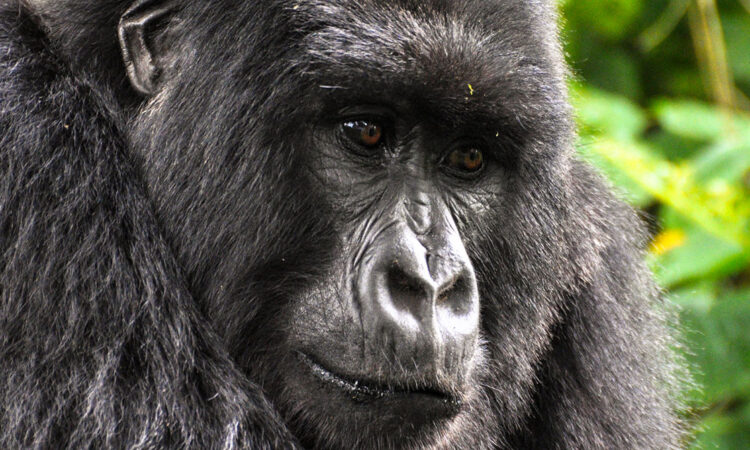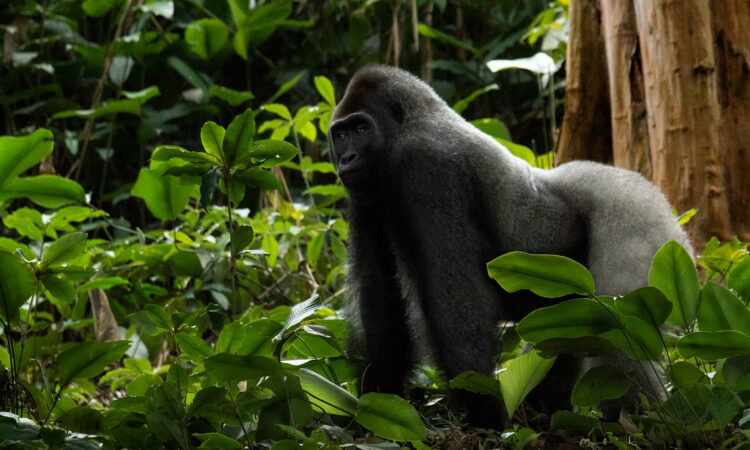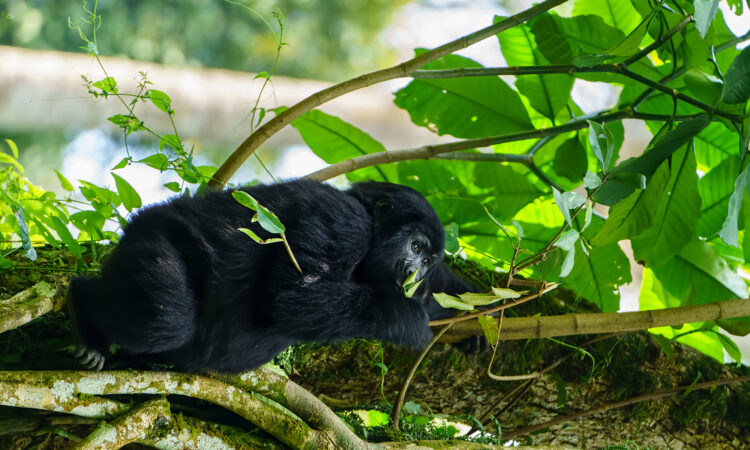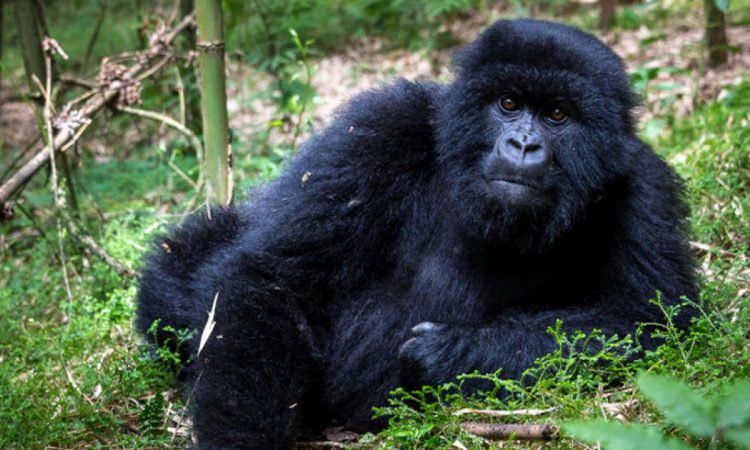
There are few experiences on earth as emotional and unforgettable as encountering mountain gorillas still undergoing habituation. Bwindi Impenetrable National Park in south-western Uganda is the only place that offers visitors the rare opportunity of spending up to four awe-inspiring hours with semi-habituated gorillas through the “Gorilla Habituation Experience”.
There is no particular and accurate definition/explanation of “Gorilla Habituation” but is simply the process of training wild Mountain gorillas to become accustomed to sight of people, especially tourists who will be visiting them from time to time. Habituation is conducted by experts that include conservationists, trackers, researchers as well as Park rangers and lasts 2-3 years. Therefore during this process, families/groups of wild mountain gorillas are slowly and gently introduced to human presence and let it be known that no gorilla group will be trekked without being habituated.
Habituation of Mountain gorillas by researchers is done to study them-their individual behavior, be named, treated of injuries and sicknesses, be protected from poachers in addition to boosting their conservation efforts with sustainable tourism initiatives. This is a learning experience that was introduced to the general public (tourists) in 2014 by the Uganda Wildlife Authority.
How Gorilla Habituation is conducted?
For mountain gorillas to become accustomed to the presence of people, each gorilla family is required to first undergo an extended habituation process lasting between two and three years, sometimes beyond. They are managed by a team of expert conservationists, researchers, trackers and rangers. The process is initiated by Park rangers who spend a short period of time with the mountain gorillas each day while keeping a specified distance at the limit of their (mountain gorillas) comfort zone.
Every few months they successively increase the time and decrease the distance until they (Park rangers) have confirmed that the mountain gorillas are prepared for tourists to start visiting them. Much as the mountain gorillas are not entirely habituated (since they are just used to rangers and trackers but not strangers especially tourists), the Habituation Experience then makes them more and more comfortable in the presence of tourists. By taking part in the unbeaten Gorilla Habituation Experience, tourists are supporting the vital work in habituating gorillas as well as ensuring their survival. It is undeniably a truly touching feeling to know that you are one of the pioneers of meeting these Giant Apes.
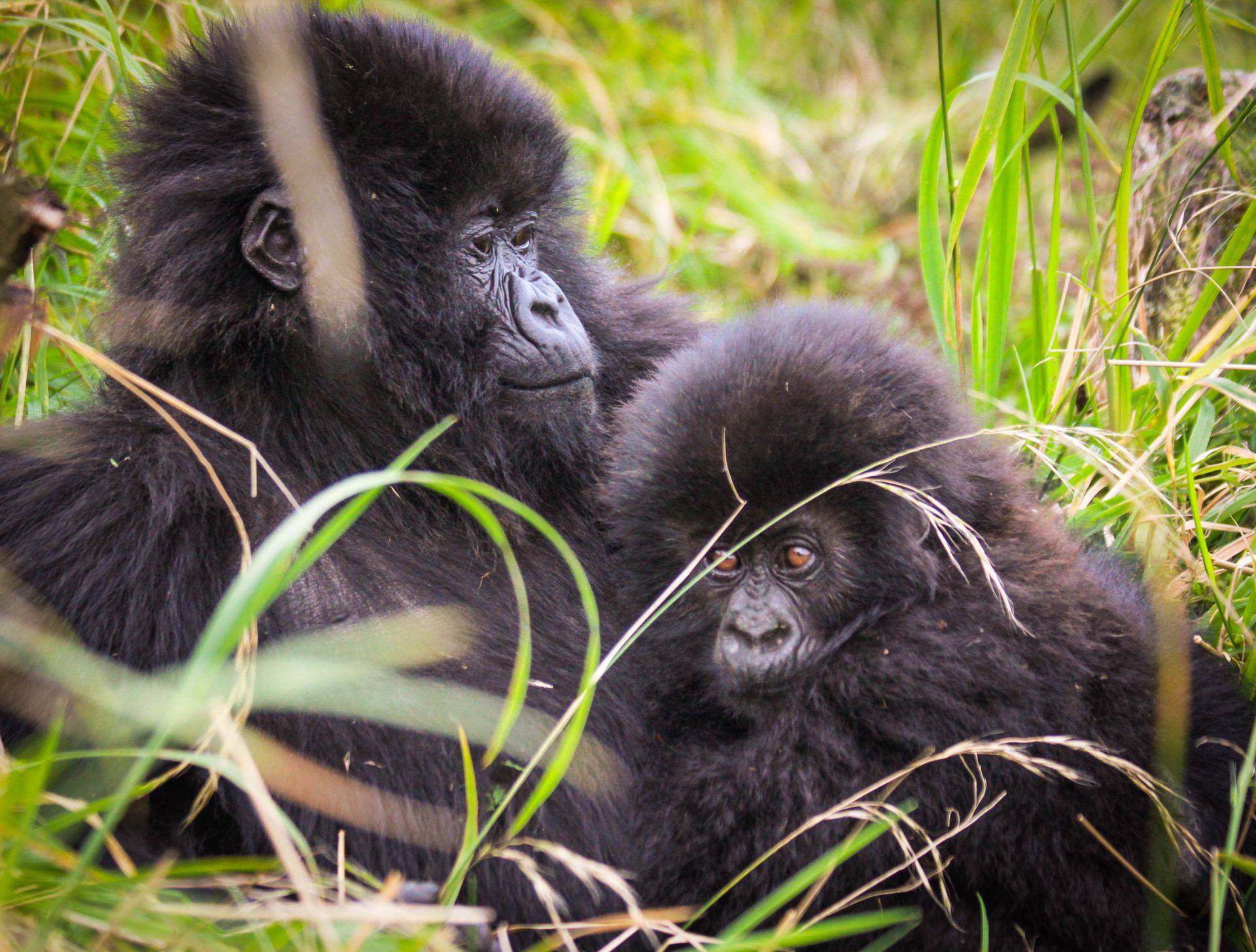
The Gorilla Habituation Experience presents visitors with a more relaxed and rewarding encounter with the endangered mountain gorillas. With plenty of time in your hand (up to four hours), you will totally be absorbed in the experience of watching them go about their daily routine of foraging, grooming each other, playing, interacting, babies being nursed under the watchful eye of the giant silverback gorilla. A limited number of visitors (four persons) per day are allowed to visit a gorilla group undergoing habituation.
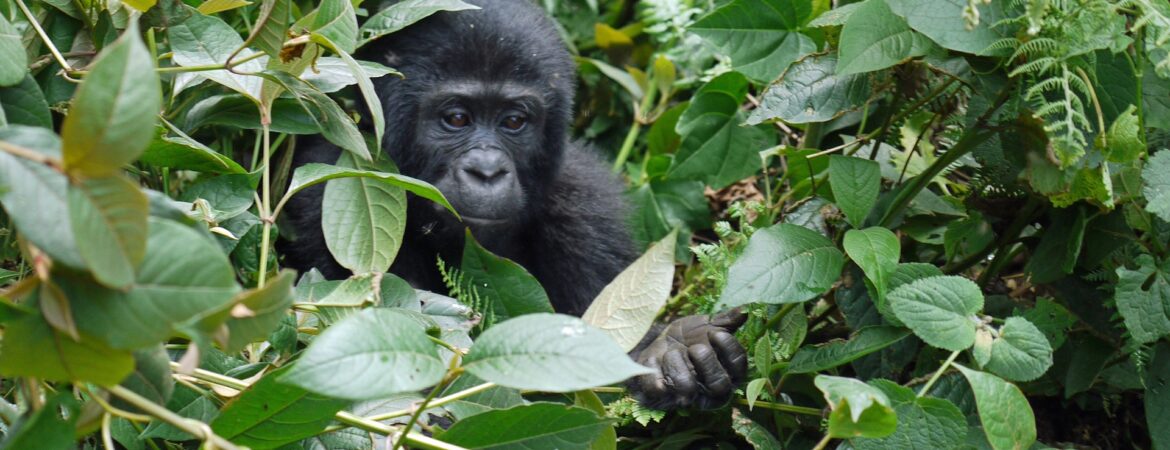
For the Gorilla Habituation Experience, visitors have to be at the trailhead by 7:00am for the start of the activity. The trail used through the jungle greatly depends on the location of the mountain gorillas the previous day and finding gorilla nests from the night before takes between one hour and 6 hours, or even more to find the gorilla group. When you walk through the Park, you will understand why it is known as “Impenetrable”. There are no established trails in the forest but rangers will be required to cut through the thick forest with machetes to create way, jumping streams/rivers, climbing steep and mossy slopes as well as ducking and diving from foliage in all directions. Once Rangers find the gorilla nests (for the previous day), it takes minutes to at least one hour to finally find them.
Gorilla Groups/Families for the Habituation Experience.
Two Gorilla Groups – Bikingi and Bushaho are presently undergoing habituation exercise within Rushaga and Nkuringo sectors in the south of Bwindi Impenetrable National Park.
Bikingi.
Bikingi is one of the Groups to visit for Gorilla Habituation Experience and named after Bikingi, the dominant silverback. It is comprised of 15 members including 2 silverbacks, 5 adult females, 2 blackbacks, 2 juveniles and 4 infants.
Bushaho Group.
This Gorilla Group was named after the area in which it was first spotted and still forages. It is led by Bahati who migrated from Nkuringo group and is currently made up of 11 members that include 1 silverback, 4 adult females, 2 sub-adult females, 1 blackback and 3 infants.
Gorilla habituation permits in Bwindi impenetrable N/park.
Only two gorilla families are open for Gorilla Habituation Experience, with each accommodating only four persons thus eight permits being available per day for this experience.
Therefore only 4 permits are allocated for each gorilla family thus advance booking (at least 6 months) is recommended.
Cost of Gorilla Habituation Permits in Uganda.
A single day of participating in the Gorilla Habituation Experience in Uganda presently costs $1500 per person per day. With this, you will have four hours with the semi-habituated gorilla group instead of the one hour with gorilla trekking, at the same amount in Volcanoes National Park in Rwanda.
The permit price includes entrance into Bwindi Impenetrable National Park, access to expert trackers, researchers and guides, security within the Park for 24 hours as well as four incredible hours with the mountain gorillas. The money paid contributes to gorilla conservation initiatives such as veterinary care, research, community development as well as general park operations.
Age restrictions for Gorilla Habituation Experience in Uganda.
Due to the venerability of Mountain gorillas and for safety purposes, there is an age restriction for the Gorilla Habituation Experience in Uganda. Interested persons have to be at least 15 years of age to enjoy this rewarding and humbling experience.
Best Time to do Gorilla Habituation Experience in Uganda.
Visitors can enjoy the Gorilla Habituation Experience in Uganda all year round, with daytime temperatures being between 20 and 25˚C. The most ideal tome of experiencing this activity is the dry season-months of January, February, June, July, August, September and December. For these amazing months, the jungle is less muddy and slippery for hiking.
For the wet season-months of March, April, May, October and November, trails are quite muddy, slippery thus difficult to maneuver through, owing to the heavy rains experienced in these months. Gorilla Habituation Experience can still go on even in rainy seasons. However, these months also offer perfect conditions for birding as well as photography especially after the rains and air is clear of dust.
ESSENTIALS FOR GORILLA HABITUATION EXPERIENCE.
It is vital to come well prepared for the awe-inspiring experience of trekking and meeting face to face with mountain gorillas being accustomed to human presence. Therefore your Packing List for the Gorilla Habituation Experience should include;
- Non-flash camera.
Cameras are important for capturing every unforgettable moment during your gorilla Habituation Experience and always make sure to come along with waterproof covering, have enough memory space and spare batteries.
- Light and breathable trekking clothing.
The appropriate clothing of Gorilla Habituation Experience includes light and breathable safari pants and long-sleeved shirts to offer protection from insect bites.
- Sturdy hiking boots.
Your hiking boots must have good ankle support and grip in addition to being properly worn-in to avoid burns and blisters. Don’t also forget cotton socks.
- Sunglasses and wide-brimmed hat.
These are crucial for protecting your eyes and head respectively from the scotching sun.
- Waterproof backpack.
Your backpack must be waterproof and have ample space for carrying your water bottle, snacks, Lunch box, insect repellant, sunscreen, gorilla permit, toiletries (lip balm, sanitary towel and toilet paper), camera, binoculars and many other items during the trekking process.
- Pair of binoculars.
Binoculars are a must-have for spotting other attractions within the forest such as small and far wildlife species, birds, butterflies and primates from a distance.
- Gardening gloves.
You must also have gardening gloves to protect your hand from bruises and scratches as you use tree branches and leaves for grip/support.
- Rain jacket.
Another must-have item on your packing list is the rain jacket or poncho for the cold mornings and evenings. Besides, Bwindi Impenetrable National Park is a Topical rainforest that receives rainfall all year round.
- Re-usable water bottle.
It is important to carry enough drinking water to keep you hydrated during the trek for mountain gorillas but having a re-usable one helps in reducing wastes in the jungles.
- Toiletries.
Important toiletries for your gorilla safari are lip balm, lotion, hair shampoo, deodorant, toothpaste, toothbrush, sanitary pads for females, nail clips and many others.
- Energy-giving snacks.
Trekking for 1-6 hours in the jungles requires carrying some energy-giving snacks especially biscuits, dried fruits, nuts and cookies.
ACCOMMODATION FACILITIES TO STAY IN DURING GORILLA HABITUATION EXPERIENCE.
A number of accommodation facilities within and close to the southern sectors of Bwindi Impenetrable National Park offer comfort and jaw-dropping views for visitors planning to undertake the Gorilla Habituation Experience. On the luxurious end include Gorilla Safari Lodge, Clouds Mountain Gorilla Lodge and many others.
Gorilla Safari Lodge.
Owned by Crystal Lodges, Gorilla Safari Lodge is one of the luxurious accommodation facilities within Rushaga sector and is nestled at the edge of Bwindi Impenetrable National Park. This 18-bedroomed Safari Lodge is surrounded by Banana and Guava trees and each of the rooms is solar-powered in addition to featuring private en-suite bathroom, flush toilets, Satellite TV and spacious seating area.
Nkuringo Bwindi Gorilla Lodge.
Nkuringo Bwindi Gorilla Lodge was established in 2007 within the southern Nkuringo sector and has since then offered a base to hundreds of trekkers. The construction of this eco-friendly Lodge was inspired by nature and materials being locally sourced from the nearby communities.
It is comprised of 10 stupendous cottages, with each of them rewarding visitors with distinct elegance as well as luxury in the middle of the jungles. The spacious rooms are fully furnished and also gave private decks that look into the lush forest.
Rushaga Gorilla Camp.
Rushaga Gorilla Camp is a midrange accommodation facility set on 6 acres of land adjacent to Bwindi Impenetrable National Park and only about 15 minutes’ walk from Rushaga sector trailhead. It boasts of luxury tents and double bandas overlooking the forest and has 30 beds in total.
There are also 6 self-contained bandas, 6 self-contained luxury tents and 2 family bandas. Other facilities here are outdoor swimming pool, a modern restaurant serving traditional and modern cuisines, spacious dining area, Conference room, Leisure Club and massage parlor for relaxation therapy, yoga and massages as well as a well-stocked bar.
Chameleon Hill Lodge.
Chameleon Hill Lodge is a midrange accommodation facility within Kisoro district, southern side of Uganda between southern Bwindi Impenetrable National Park and Mgahinga Gorilla National Park. This Lodge enjoys the views of Lake Mutanda on top of having the Virunga Volcanoes at its backdrop. It features 10 luxurious chalets decorated with distinctive color schemes. The Chalets also have hand-made furnishings and some of the Lodge facilities include well-stocked bar, dining and lounge area.
Other accommodation facilities in or near the southern sectors of Bwindi Impenetrable National Park include the budget Bwindi Backpackers lodge, Gorilla Heights Lodge, Lake Muhele Gorilla Lodge, Rushaga Gorilla Haven Lodge, Crested Crane Bwindi Hotel and the luxurious Clouds Mountain Gorilla Lodge among others.
ABOUT MOUNTAIN GORILLAS.
Mountain gorillas (scientifically Gorilla beringei beringei) are one of the sub-species of Eastern gorillas and listed as “endangered” under IUCN Red List. These Giant Apes occupy lush Tropical rainforests, high in the mountains with altitudes ranging from 2200 to 4200 meters above sea level.
They have darker, thicker and longer fur compared to other species of Great Apes, owing to their unpleasant habitats. This helps them to comfortable live in their natural environments where temperatures sometimes drop below freezing point. The thick rainforests of three countries-Rwanda, Rwanda and Democratic Republic of Congo are haven to about 1063 mountain gorillas that live in the wild (and can’t survive captivity). For Uganda, these Great Apes are found in Mgahinga Gorilla and Bwindi Impenetrable National Park, Rwanda in Volcanoes National Park while in the Democratic Republic of Congo they are found in Virunga National Park.
Mountain gorillas live in socially strong families/groups of 5-30 individuals and headed by a silverback gorilla. He makes major family decisions like where to eat and nest as well as having a number of privileges such as being the first to feed, mating females in the family and siring young ones.
However, these privileges also come with sacrifices such as conflict resolution in the family, protecting and defending his members from external threats especially humans, predators (leopards) as well as wild gorillas and this sometimes even costs life.
Mountain gorillas are calm, gentle, peaceful and intelligent species that utilize tools to ease their lives and communicate in a number of ways. Each gorilla is identified by nose prints just like each human being identified by unique fingerprints.
These Great Apes are primarily ground-dwelling (terrestrial), quadrupedal and diurnal-spend three quarters of the day eating. Their arms are longer than legs.
Mountain gorillas are herbivorous and their diet mainly composes of stems, leaves and shoots of at least 85% of over 142 plant species. They also consume barks, fruits, flowers and roots in addition to small invertebrates.
ABOUT BWINDI IMPENETRABLE NATIONAL PARK.
Bwindi Impenetrable National Park in south-western Uganda is the only home of the incredible gorilla habituation experience. This Park was established in 1991 and currently extends for only 331 square kilometers. It is divided into four gorilla trekking sectors/regions-Rushaga, Buhoma, Nkuringo and Ruhija with each of them sheltering several gorilla groups/families.
There are generally 120 species of mammals, 350 bird species, over 200 butterfly species, several tree species, reptiles and Amphibians in the lush and Impenetrable National Park of Bwindi. Besides the two gorilla groups for the habituation Experience, visitors can also trek Mishaya, Busingye, Nshongi, Kutu, Bitukura, Rwigi, Mucunguzi, Mubare, Rushegura, Habinyanja, Mukiza, Oruzogo, Nkuringo, Christmas, Katwe and Bweza Gorilla Groups while Kyaguliro Group was reserved for research purposes.
Access to Bwindi Impenetrable National Park.
Situated in the south-west of Uganda, the verdant Bwindi Impenetrable National Park can be reached by air and road transport. Most visitors to Bwindi arrive the country through Entebbe International Airport, the only International Airport and main hub/gateway into the country. The Airport is found in the Town of Entebbe on the shores of Lake Victoria in Central Uganda.
The First and most popular option to reach Bwindi Impenetrable National Park is by private vehicle from Entebbe Airport/Town. The journey lasts about 8-9 hours and to spice up your spice up your experience, optional visits to other incredible destinations such as Queen Elizabeth and Murchison falls National Parks for game viewing and boat cruises as well as Kibale Forest National Park for chimpanzee trekking are recommended.
If you are short on time or not willing to spend long hours on the road, opt for a flight to Bwindi Impenetrable National Park. Two airstrips presently service Bwindi Impenetrable National Park and they include Kihihi and Kisoro with daily flights arranged from Entebbe International Airport.
Flights last about one and a half hours. Since the Gorilla Habituation Experience is conducted in the southern sectors, you will arrive through Kisoro Airstrip then continue to Bwindi by road taking 1.5 hours.