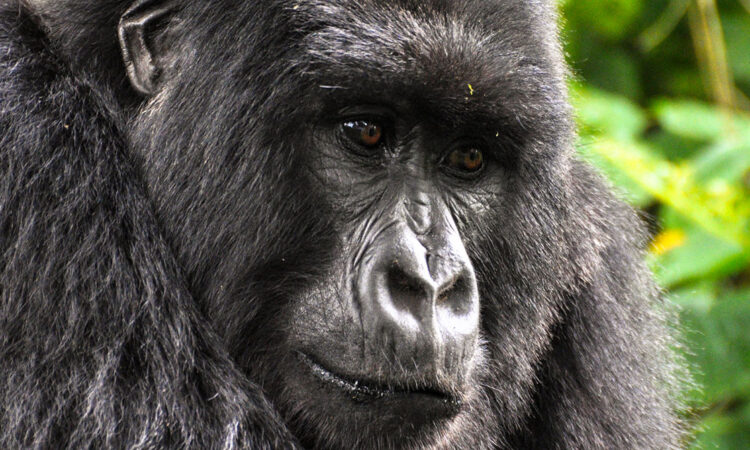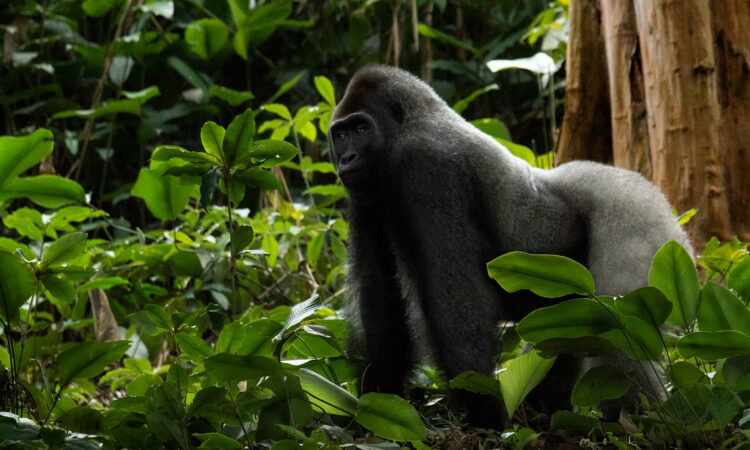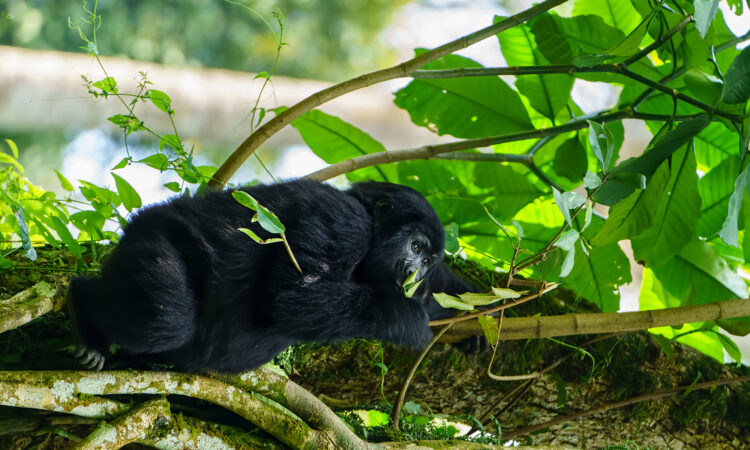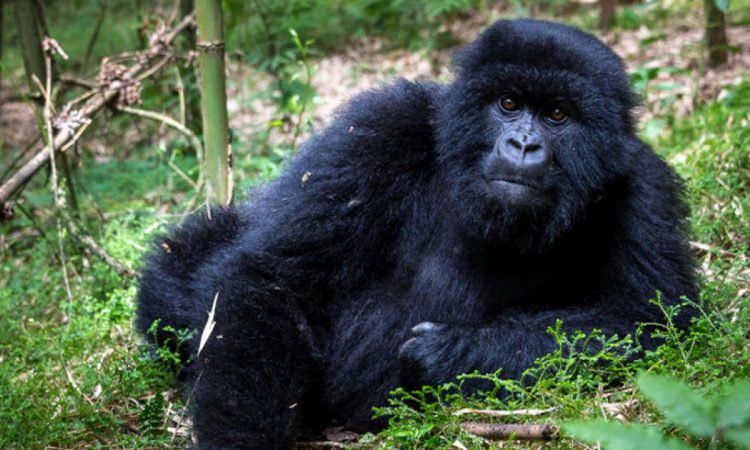
Mountain Gorillas have stocky bodies and are undeniably huge in size but doesn’t make them immune from predators and other external threats. Their commonest predators are leopards and humans, and although the former have the capability of killing the mountain gorillas it is usually difficult since gorillas live in families/groups. Leopards being tree-climbing predators take advantage of this to attack mountain gorillas especially at night when they are quite unaware.
Humans are the biggest enemies of mountain gorillas where they are captured in traps or suffer from gunshots. In some areas especially the Democratic Republic of Congo, the mountain gorillas are poached for meat hence making them to develop several defense mechanisms.
Firstly, defense mechanisms are defined as unintentional psychological mechanisms that brings down anxiety from an intolerable harmful stimulus. Mountain gorillas also have a number of defense mechanisms as explained below;
Beating their chests.
The first reaction of mountain gorillas to fear or any intolerable harm is beating their chest and stumping feet while making loud sound/hoots. This is done to create fear within the predator and alert other members of the group/family to run to safety. It is the duty of the dominant silverback to fight and defend the other members of the family and sometimes even leading to death. Silverbacks sometimes go as far as breaking vegetation and in the process scaring away the enemy.
Standing upright to appear taller and bigger.
Another interesting defense mechanism for mountain gorillas is standing upright to appear bigger and taller, thus scare away the predators.
Their strong hands.
Mountain gorillas generally have stocky bodies with strong hands that they use while fighting their predators-especially leopards. Their hands also ease locomotion and aid them while lifting or crushing large objects. Relatedly, the huge size of mountain gorillas scares their enemies. The dominant silverbacks normally weigh more than females and when it comes to size, they are also bigger than their enemies-humans and leopards thus defense mechanism.
Displaying and exposing their strong canine teeth.
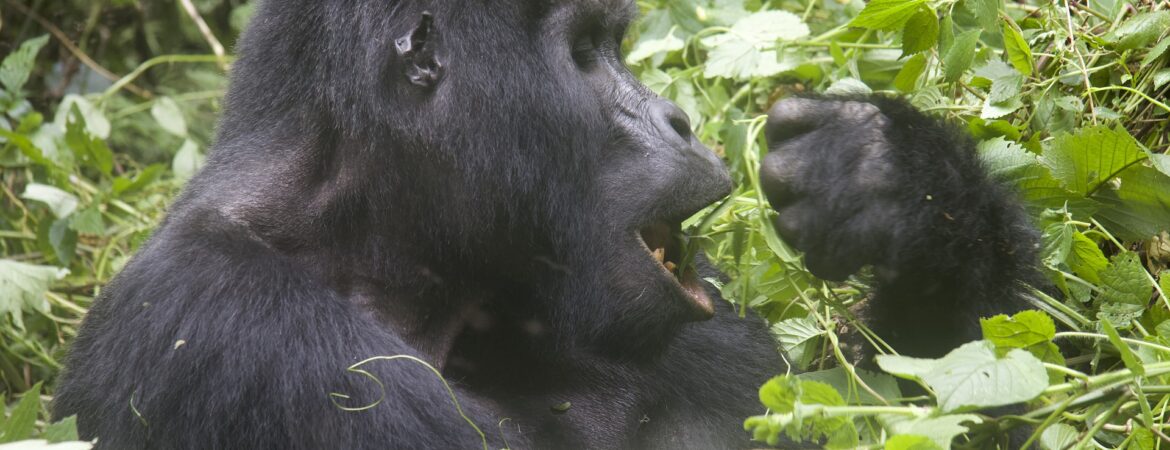
When faced with danger, mountain gorillas also charge while exposing and displaying their strong canine teeth to scare away their enemy. Their canine teeth can even cause death of their opponent, especially if inflicted with deep wounds.
Building strong ties around silverbacks.
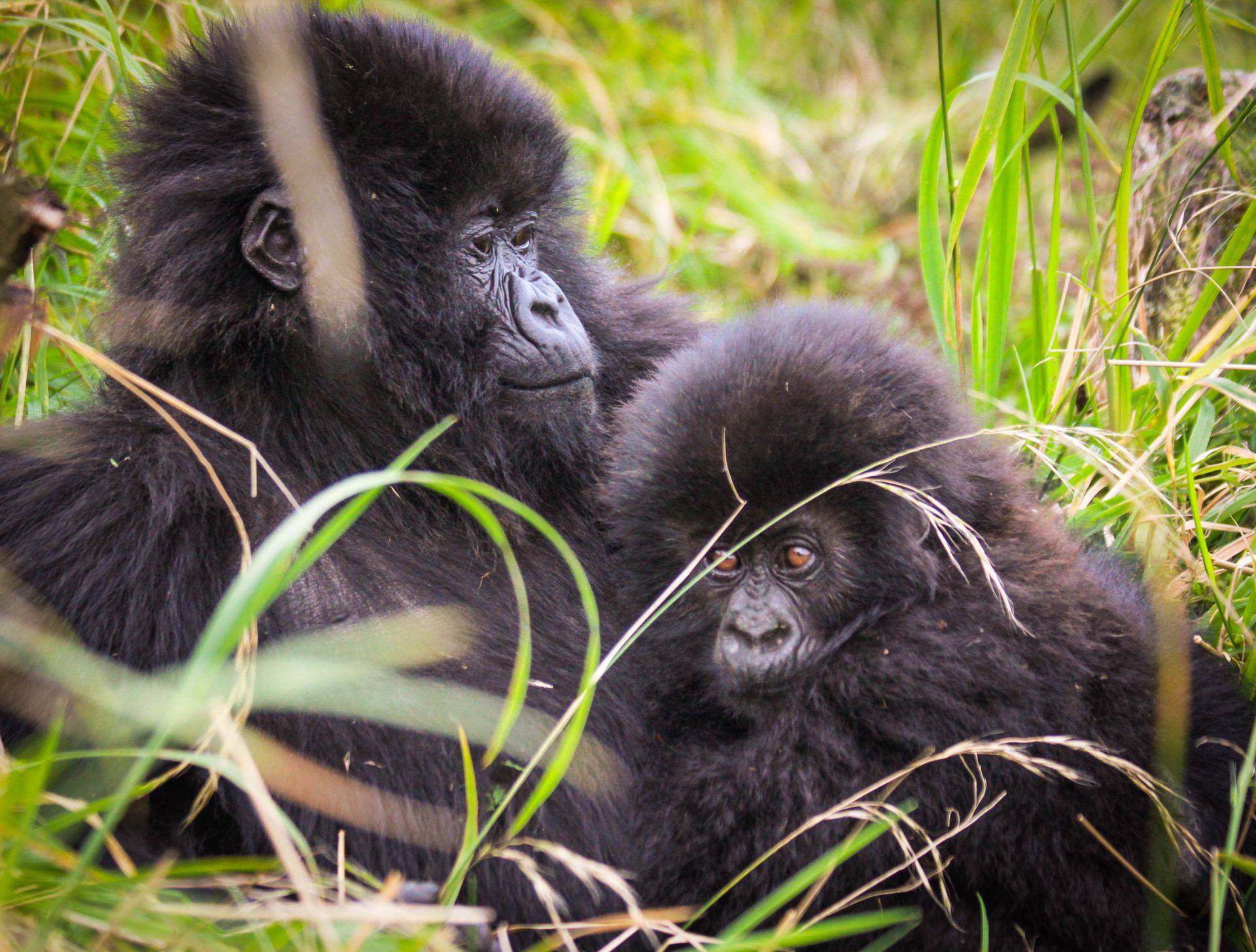
Just like fathers in typical home setting, dominant silverbacks are considered the defenders of their respective gorilla families/groups. Females and infants usually build strong ties around silverbacks for defense or when infants are threatened.
Always moving and gathering in groups.
Mountain gorillas also defend themselves by always living and moving in groups. United we stand and divided we fall applies to gorilla groups. It is easier for mountain gorillas to fight their common enemy especially poachers and leopards when silverbacks join hands yet a lone silverback can easily be killed by an enemy.
The population of endangered mountain gorillas currently stands at about 1063 individuals and trekking them is conducted within three countries. Uganda offers two gorilla trekking destinations, Bwindi Impenetrable and Mgahinga Gorilla National Parks with a total of 21 habituated gorilla groups, Rwanda (where they are trekked within Volcanoes National Park) and the Democratic Republic of Congo (trekked within Virunga National Park).