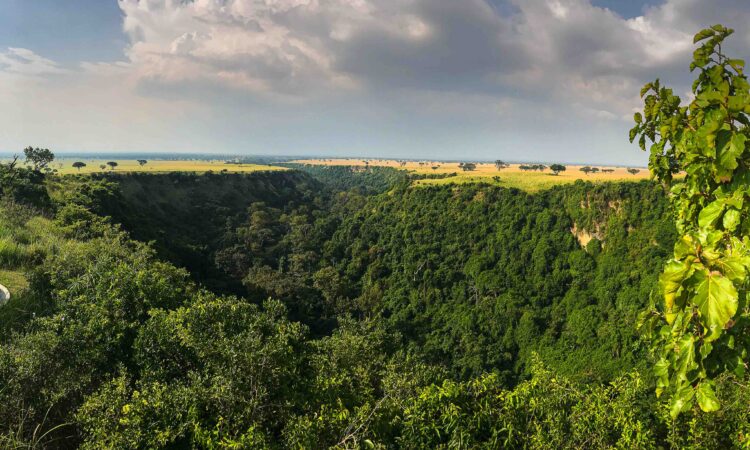
The crater lakes in Queen Elizabeth National Park sprawl around the northern part of the national park (Mweya peninsular).
Formation of Crater Lakes in Queen Elizabeth National Park.
It is believed that the Crater Lakes of Queen Elizabeth National Park were formed by volcanic activities that blew off the top of now extinct volcanoes over 8000 years ago. As a result, the Lava was pushed out through the created vents with tremendous pressure yet the ash and rock debris on the sides of the basins and volcanoes were also left around the middle/or vent hence later forming Craters. When the craters were filled with rain water, they became crater or Volcanic lakes. Others are not filled with water and are explored anytime by visitors.
Some of the phenomenal Crater Lakes in Queen Elizabeth National Park are;
Katwe Crater Lake.
Katwe is the most popular Crater Lake in Uganda and is widely known for salt mining and visitors to Queen Elizabeth National Park sometimes undertake tours around the Lake to have an insight into Traditional salt mining. The lake is about 27 kilometers from the park’s Kabatoro Gate and can be best explored in the morning and evening.
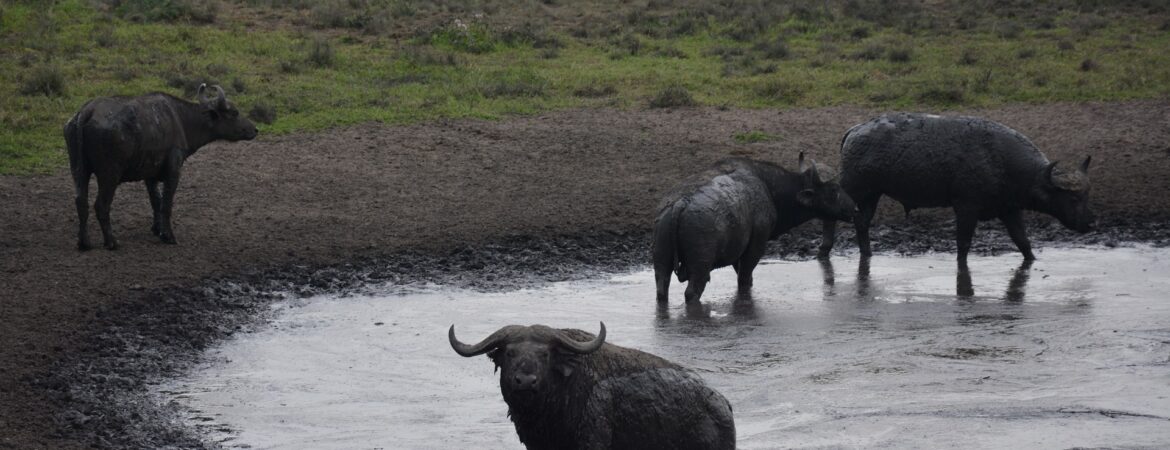
Close to this Crater Lake are cape buffaloes, elephants, Uganda Kobs as well as warthogs and while here, expect to enjoy views of the Kazinga Channel, Lakes Edward and George in addition to the Mountains of the Moon (Rwenzori Mountains).
Nyamunuka Crater Lake.
Nyamunuka is a seasonal Crater Lake and popular for its foul smell, hence the name “Nyamunuka”. It is also frequented by animals because of its high Sulphur concentration that cure their wounds from fights with predators as well as help them do away with ticks. Being a seasonal lake, Nyamunuka Crater Lake dries up in the dry season.
Bunyaruguru Craters.
Bunyaruguru Craters are sometimes referred as the “Bunyaruguru Crater Fields” and are nestled in the south of Lake George, west of Queen Elizabeth National Park on Kichwamba Escarpment along the western arm of Albertine Rift Valley within this park. The Bunyaruguru area is comprised of 20 Craters, some of which have freshwater with fish thriving in them while others have saline water with no fish being able to survive in them and others filled with vegetation.
One of the craters is Lake Nkugute (also known as Lake Rutoto) curved in the shape of Africa’s Map perfectly viewed along Kasese – Mbarara Highway and always filled with water. This is a Lake of unfolding mysteries and still in Bunyaruguru area are the Twin Lakes of Nyungu and Rwizongo near Rugazi Post Office.
Lake Munyanyange.
This seasonal lake is situated in the North-eastern side of Lake Katwe, within Queen Elizabeth National Park. It extends for only 1.5 square kilometers and is known as the home to Uganda’s flamingos.
Things to do around the Crater Lakes in Queen Elizabeth National Park.
Game drives.
The Crater lakes are usually frequented by elephants, Cape buffaloes, Hippos, warthogs, Topis, bushbucks and Uganda Kobs thus ideal game viewing spots in Queen Elizabeth National Park.
Birding.
The Crater Lakes are synonymous with birds, with numerous migratory species especially lesser and greater flamingoes, Black-winged stilt as well as African spoonbill among others.
Guided walks.
Guided walks are mainly conducted around the Katwe Craters where visitors are introduced to the plots and the mind-blowing traditional salt mining processes.