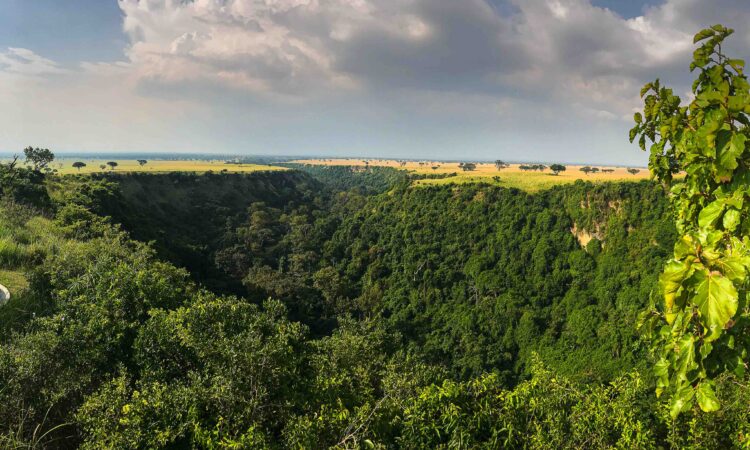
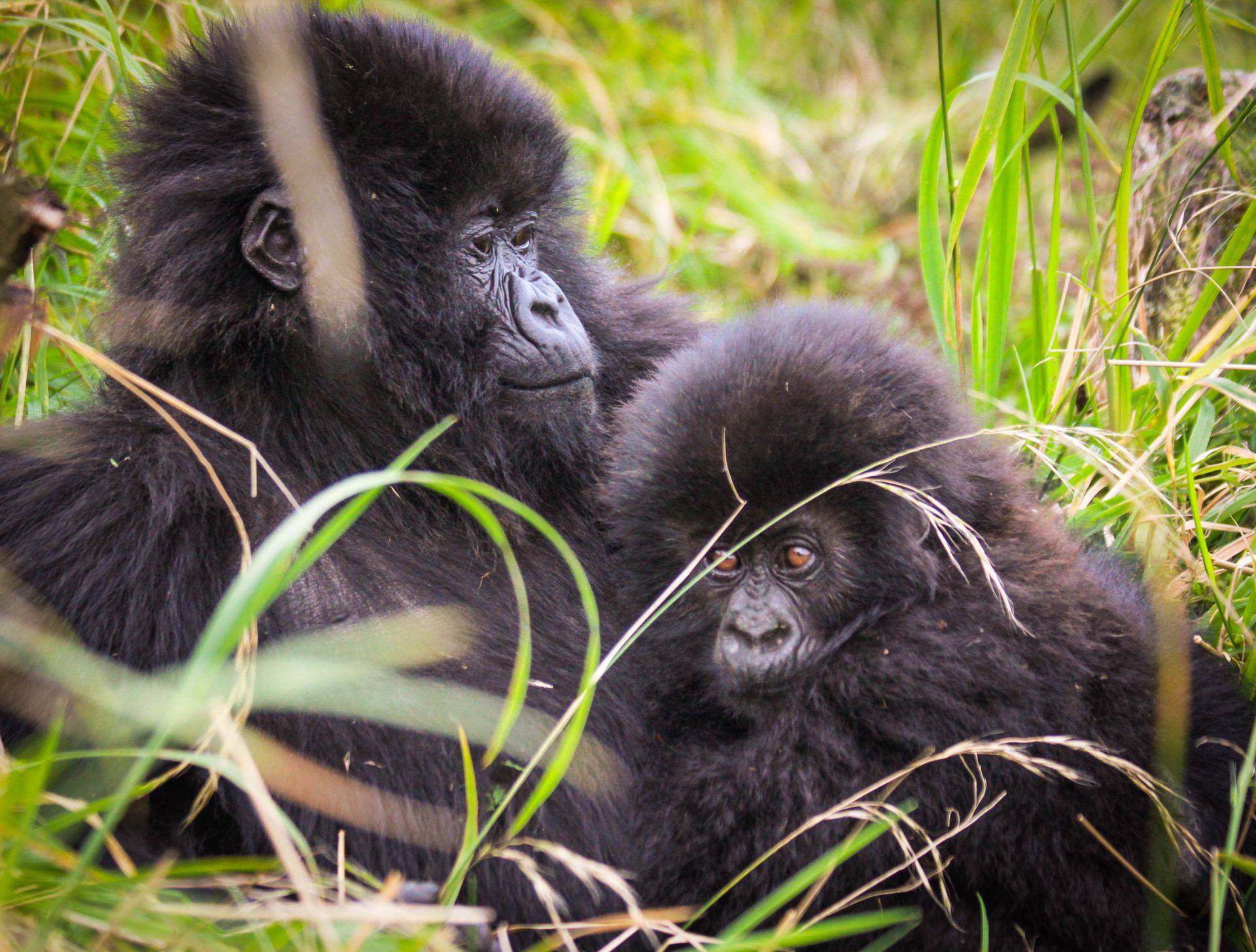
Chimpanzees are one of the most outstanding primate species, found within the tropical moist forests, savannah woodlands and grassland-forest mosaics of up to 3000 meters above sea level. These Great Apes are our closest cousins containing up to 98.7% of our DNA. How do they successfully live and thrive in their natural environment; use senses of smell, sight and hearing as well as search for food? The following are some of the chimpanzee adaptations;
Possession of opposable thumbs.
Just like humans, chimpanzees possess opposable thumbs that make it easier for them to grasp and climb trees. Their hands also enable them to groom each other and fight when faced with external threats, like other chimpanzees, humans, leopards, lions in their natural environment.
Their extraordinary forelimb – suspensory locomotion.
Another chimpanzee adaptation is the use of a forelimb-suspensory locomotion in that they can easily use their long hands to swing from one tree branch to the other whereas the shorter hind legs ease walking and standing on the ground although they are not bipedal like humans.
Chimpanzees are one of the most intelligent primates, in that they can easily follow instructions given to them, resulting from their large brains relative to their body sizes. Their brains are also fundamental in fast decision making.
Use of tools.
Chimpanzees are one of the few primates that make and use their own tools. For instance, they will use specialized dipping sticks to find foods especially honey, termites and Ants. Interestingly, they also utilize rocks as weapons while hunting or fighting against other chimpanzees (not from the same troop).
Twigs are surprisingly used as toothpicks and adult chimpanzees train infants on different tools and how to use them. It is very interesting to know that the use of tools within chimpanzee population extends over several generations.
Magical communication Skills.
Chimpanzees also have breathtaking communication skills centered on highly expressive faces, vocalizations as well as body language/positions depending on social circumstances. These Great Apes can swiftly pass on vital information by vocalization and visualization, expressions such as pouts and grins with different meanings. Other chimpanzees can be alerted in times of threats/danger in their natural environment. Body movements pass on information about aggression, dominance and excitement while vocalizations such as screams, hoots and grunts portray different feelings during locomotion, feeding as well as interacting with other chimpanzees.
Socialization.
Another unique adaptation of chimpanzees to their natural environment is living in highly social Troops/groups for survival. Living in troops brings in cooperation and competition as a result of their intelligence. These extraordinary apes deceive, manipulate and control their emotions in addition to actively participating in systematic social environment.
Alpha females relay learned knowledge and skills to infants, for example about the safe foods for consumption and how to crack nuts. Dominant males are in charge of security and generally protecting the troop from any kind of threats.
Sensory adaptations.
Chimpanzees, like humans have excellent senses of hearing, sight and smell which helps them to become alert and fully aware of predators in their natural environment as well as during a search for food.