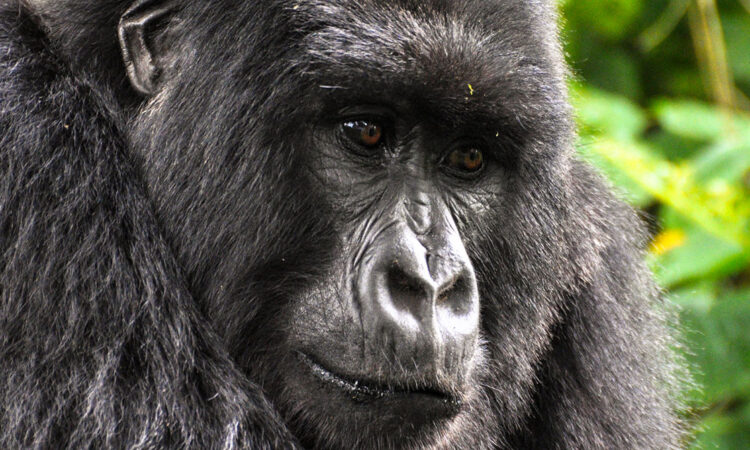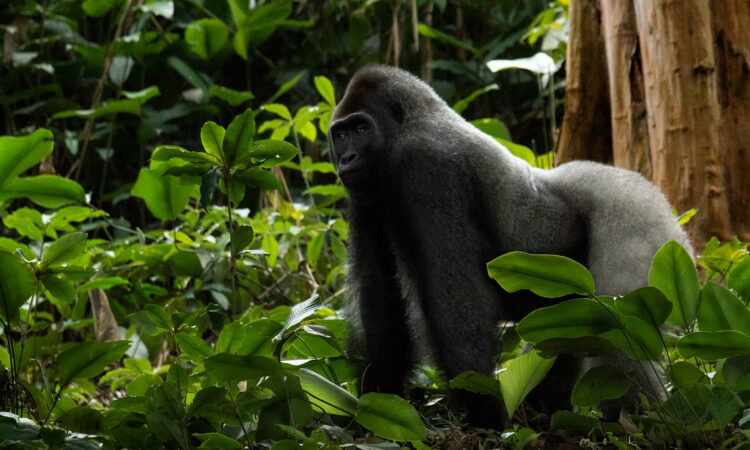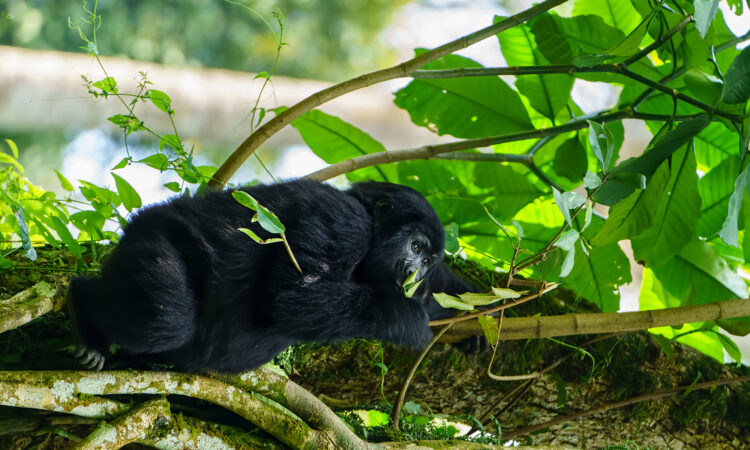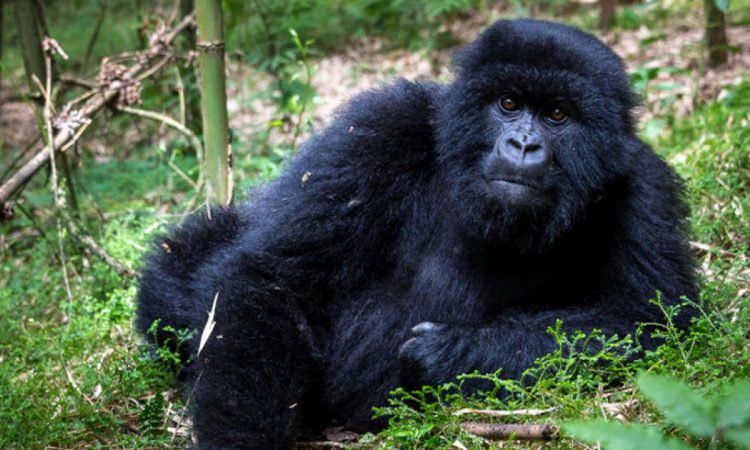
Though they are gorillas, don’t be confused because these are some of the features and facts that differentiate the mountain gorillas from any other gorilla species in the world. We share with mountain gorillas about 98% DNA thus considered one of the human’s closest relatives of all primates. Scientific name; gorilla Beringei Beringei is one of the most sought-after gorilla species in the world; only in the continent of Africa. Telling you only the name is not satisfactory enough, thus a reason why we unveil to you more facts and characteristics of mountain gorillas.
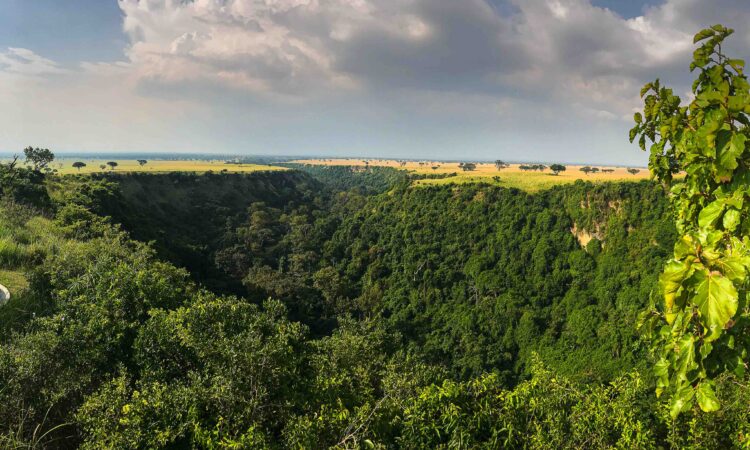
If not in the continent of Africa, around the vast Virunga chain of mountains, sprawling through Uganda, Democratic republic of Congo and Republic of Rwanda; then those are not mountain gorillas. These special species of apes are not caged in any zoo but live at large in the tropical forest of Virunga.
They prefer raised areas, with moderate weather conditions. About 1060 individual mountain gorillas currently exist on earth. With half of them in Bwindi impenetrable national park and Mgahinga Gorilla national park in Uganda; a quarter of them in Volcanoes national park in Rwanda and the rest in Virunga national park of Democratic Republic of Congo.
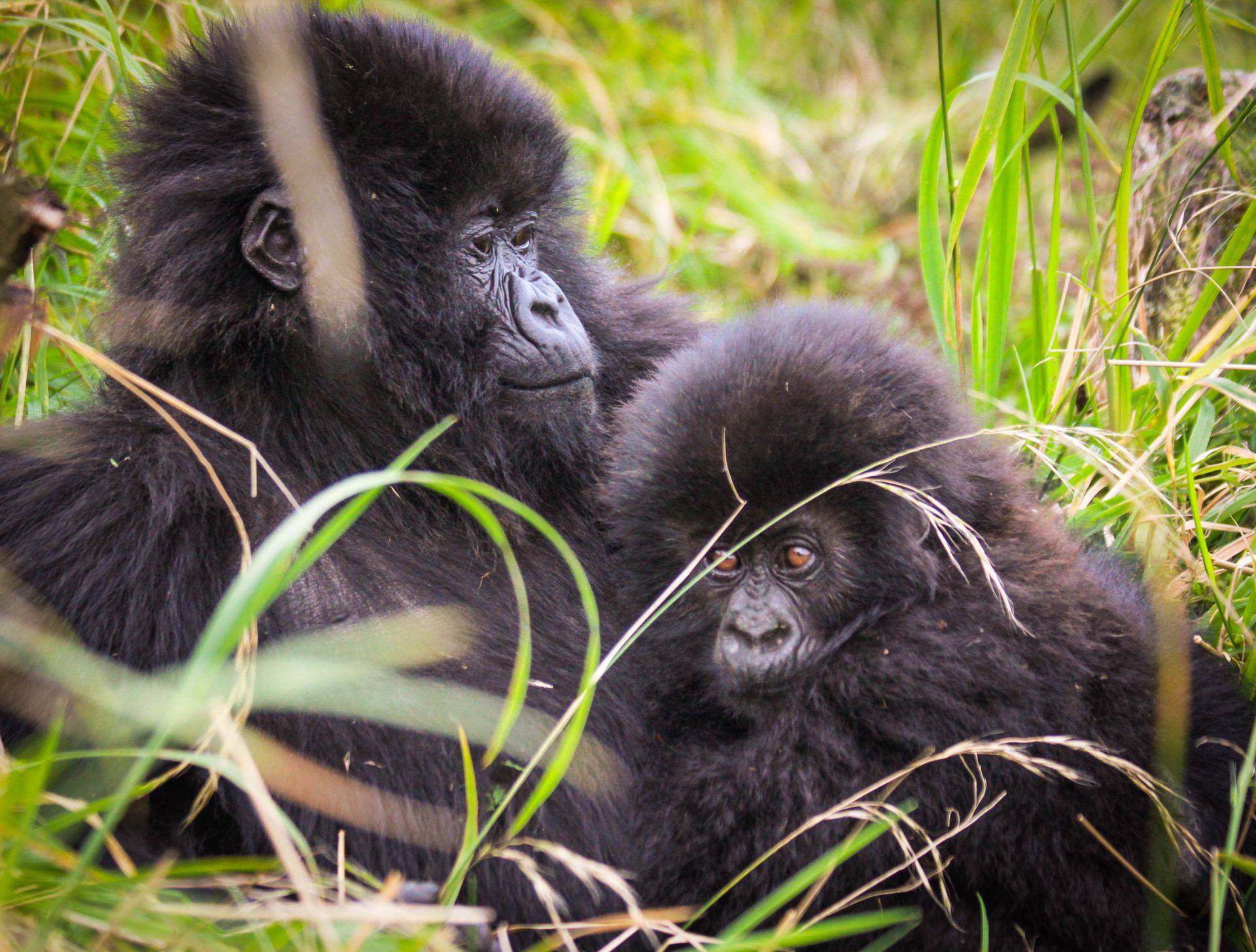
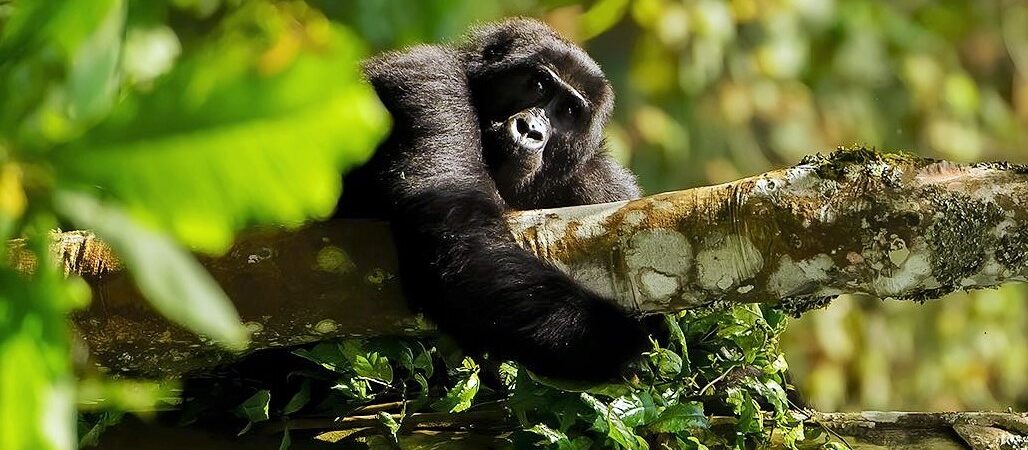
Mountain gorillas are one of the largest apes living under the sun globally; belonging to the subspecies of eastern gorillas. They have huge chests, well-built arms, wide feet and hands. In comparison with their cousins lowland Gorillas; they have shorter arms and long hair covering the whole body, except for the thumbs and eyes. The compact black hair gives them warmth in the cold weather deep in the jungle.
Where do mountains gorillas stay?
They dwell in Virunga chain of mountains, deep in the misty tropical jungles of Africa composed of bamboo forests, sub-alpine, grasslands and beneath the vast volcanic mountains. Occasionally, mountain gorillas move from one territory to another.
Other facts.
- They have 32 teeth as humans and wrinkles on the nose.
- These creatures weigh up to 135 to 220 kilograms and about 1 to two meters tall. Records reveal that their lifespan is 40 to 50 years. As it is a unique thing to see a human give birth to twins at the same time, likewise in the jungle; the gestation period is often 8.5 months.
- A birth to twins is true luck, rare in any troop and attracts attention from conservationists, researchers and visitors.
- The main enemies of these apes include humans, leopards and crocodiles.
What do mountain Gorillas Eat?
Mountain gorillas are primarily herbivores, eating about 18 Kgs of vegetation per day. They feed on wood, roots, thistles, succulent vegetation and celery. They fetch their drinking water from the morning dew and vegetation.
Most of their daytime is spent feeding from one territory to another. The adult male and female teach the young ones how to eat and find food.
How do mountain gorillas behave?
These are very social, shy and gentle apes. A group is called a family / troop, made up of between 7 to 40 members, under the leadership of a dominant silverback. At the age of 11 or 12, a grown-up male with a silver-like lining at the back (a silverback) can take over a family, after a breakup, death of the current leader or inheriting leadership.
A silverback is 10 times stronger than a human and protects its family from any form of attack, even to the point of sacrificing his own life.
Unless otherwise, two gorilla families can’t meet and be at peace with each other. At the age of 11 years, the females depart from their biological families, following either a male or leaving alone. A fully grown-up female starts reproducing at the age of 10; giving birth after 4 or more years.
The weight of a newborn gorilla is about 4 pounds; usually very weak, with awkward movement, but grow stronger very fast, though very vulnerable.
After a mention of all that you need to know about the rare mountain gorillas, it is high time you visited them in their natural habitats. To track the mountain gorillas, you need to book a tracking permit to Bwindi, Mgahinga, volcanoes or Virunga national parks in Uganda, Rwanda and D.R. Congo respectively.