While it is conceivable that gorillas eat humans, it is very improbable because all the four sub-species of gorillas (Eastern lowland, western lowland, Cross River and Mountain Gorillas) are mostly herbivores that entirely depend on Bamboo shoots, nuts, seeds, stems, leaves, fruits and barks although some of them have omnivorous tendencies-consuming termites, ants and worms. The western lowland gorillas in particular have a high appetite for Ants and Termites, to the point of breaking open termite nests to eat the larvae.
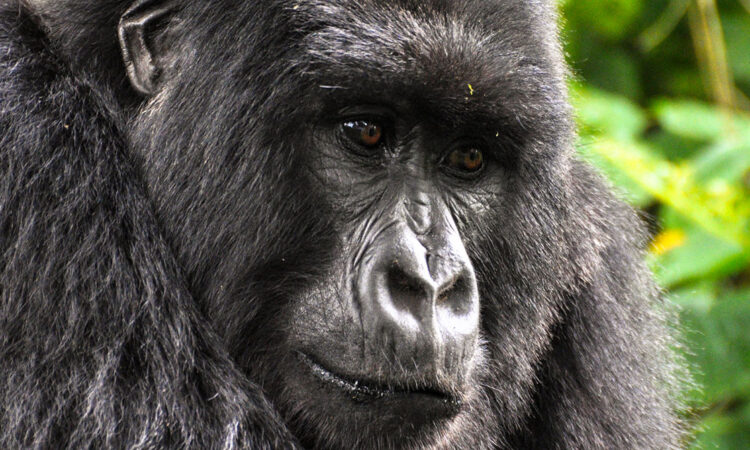
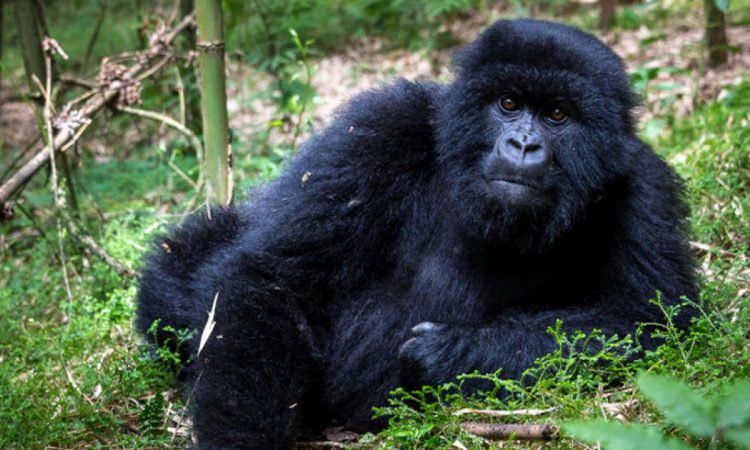
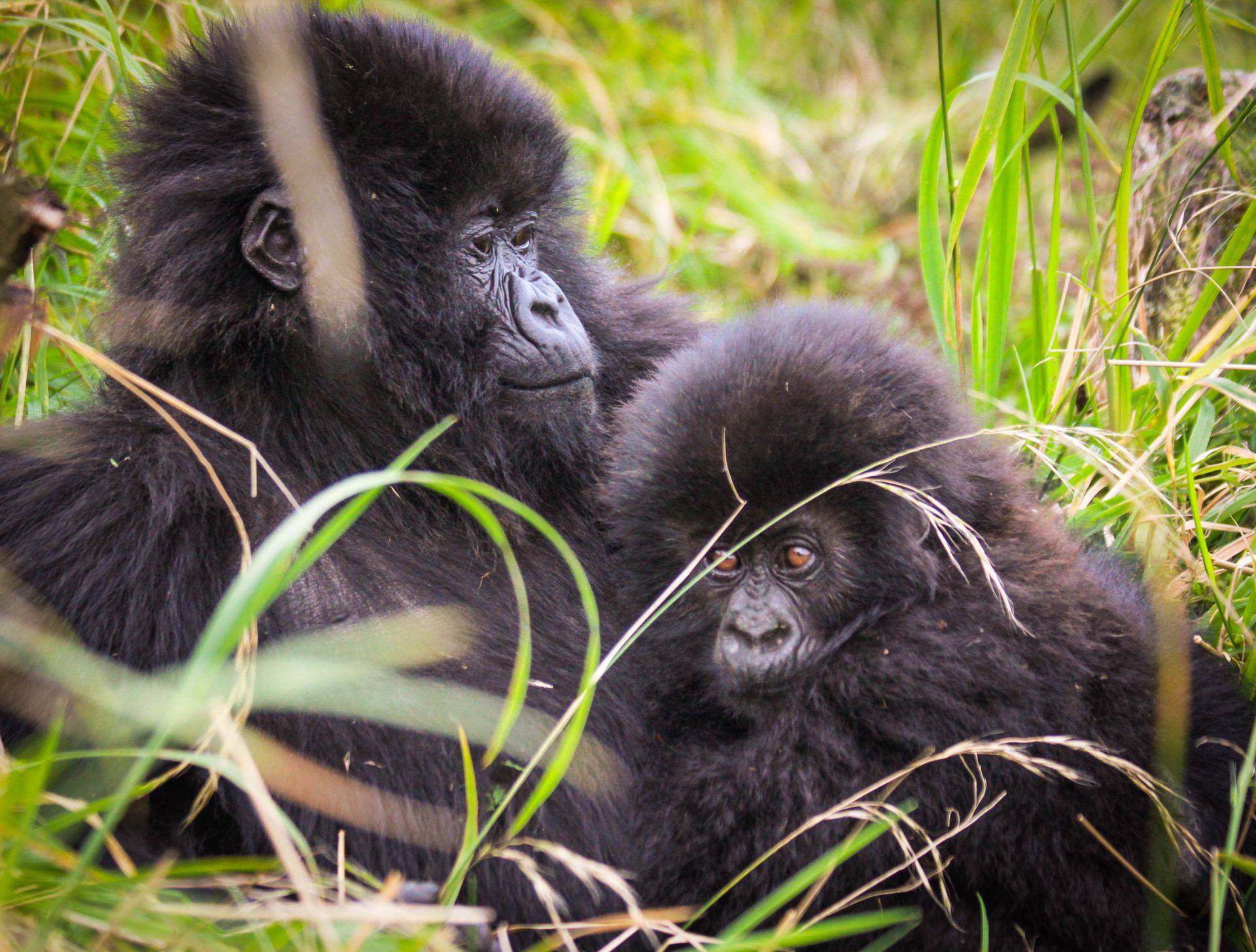
Mountain Gorillas; scientifically known as Gorilla Beringei Beringei eat parts of at least 142 plant species as well as only 3 fruit varieties because there is hardly any fruits in their natural environment because of the high elevation. Almost 86% of their diet comprises of stems, leaves and bamboo shoots while 7% comprised of roots, 3% flowers, 2% fruit varieties while 2% snails, ants and crabs.
Eastern lowland gorillas, scientifically referred to as Gorilla beringei graueri eat up to 104 species of flora.
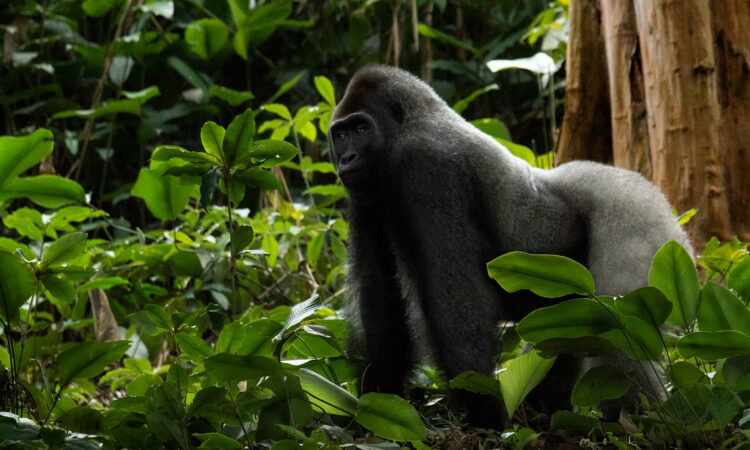
Scientifically known as Gorilla gorilla gorilla, the western lowland Gorillas consume only about 97 species of flora of which 67% are fruit varieties, only 17% leaves, stems and seeds as well as about 3% caterpillars, Ants and Termites.
The Cross River Gorillas scientifically known as Gorilla gorilla diehli mainly consume piths, leaves, fruits, stems and sometimes invertebrates. An adult male gorilla can take in between 18 and 30 kilograms of vegetation each day. They hardly drink water, owing to the succulent vegetation they consume and these usually comprise at least half water and morning dew.
All in all, gorillas largely survive on vegetation especially roots, grasses, leaves, roots, stems, herbs and vines with comparatively low nutritional quality. The natural environments of gorillas make their food readily available all year round.
How gorillas find / collect food in their natural habitats?
Gorillas have many ways of collecting food in their natural environments. They use their spectacular strength to break vegetation apart, for instance an adult male gorilla can break apart a banana tree to its interior so as to consume the tender pith.
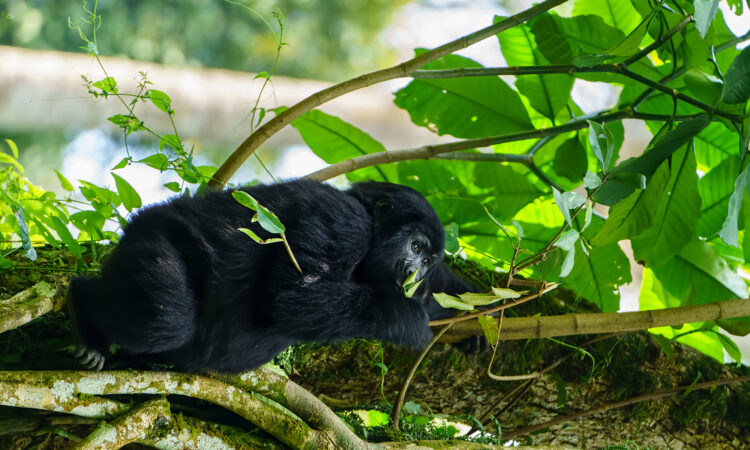
Surprisingly, gorillas are also discriminative foragers, only consuming parts not whole of vegetation. They can for instance choose to consume roots, leaves, stem/stalk or pith of a specific plant. The good thing about these Great Apes is that they do not over exploit a range for food thus allowing fast recovery and regrowth to happen. They move from place to place with the potential of ranging between three and six kilometers a day for food.
Back to the question, do Gorillas eat humans? No, although there are cases of gorilla aggressiveness towards humans-not for food but defense in case they perceive threats. These shy and gentle Giant Apes only attack when threatened.