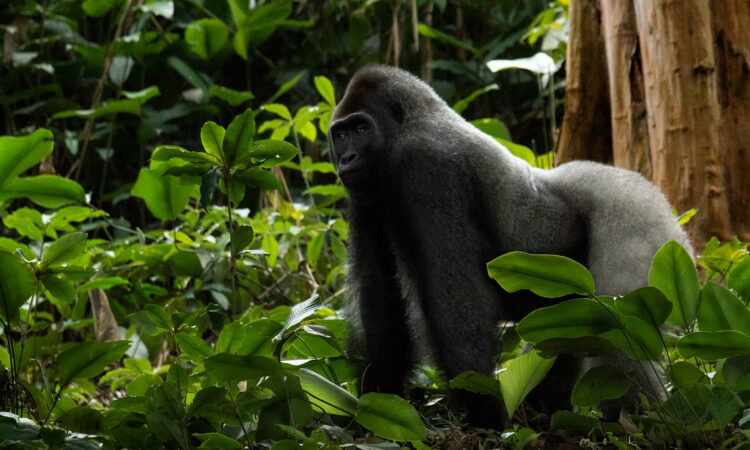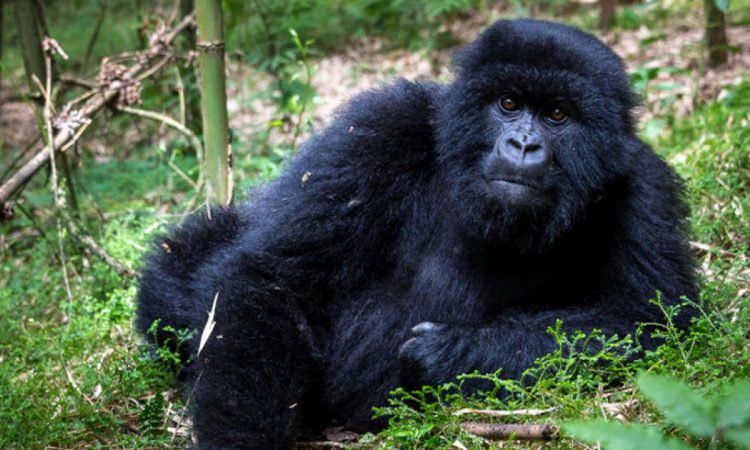
Mountain gorillas are sub-species of Eastern gorillas (together with the Eastern lowland Gorillas). These primates are scientifically known as Gorilla beringei beringei and are categorized as “endangered” under IUCN Red List (as of 2018). They inhabit two significant locations – on the foothills of Virunga Mountains of East and Central Africa within Mgahinga Gorilla National Park in south-western Uganda, Volcanoes National Park in north-western Uganda and Virunga National Park in Eastern Democratic Republic of Congo. The other population of mountain gorillas is sheltered within Bwindi Impenetrable National Park in south-western Uganda.
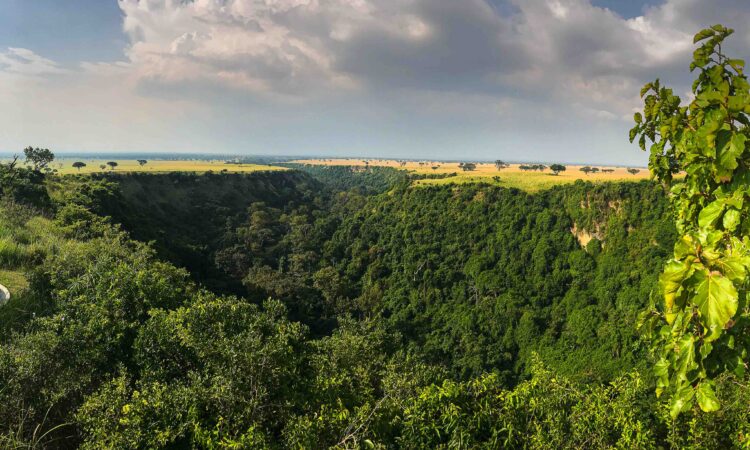
Just like their name, these Giant Apes occupy the lush tropical rainforests high in the mountains, at an altitude of 2200 to 4300 meters (7000-14,000 feet) above sea level. Their habitats are denser at the bottoms and foothills of the mountains but become sparser within the higher altitudes. Forests where these great apes live are misty, cloudy, dense and extremely cold.
As of 2018, the number of mountain gorillas stands at 1063 individuals and their numbers prove to be continuously growing due to the recent years of conservation efforts. Even with challenges such as poaching, political instability in some areas and habitat loss/encroachment, their population has continuously increased. Humans share about 98.2% of DNA with the mountain gorillas, thus can be affected by human communicable diseases such as cough, flue and sometimes measles.
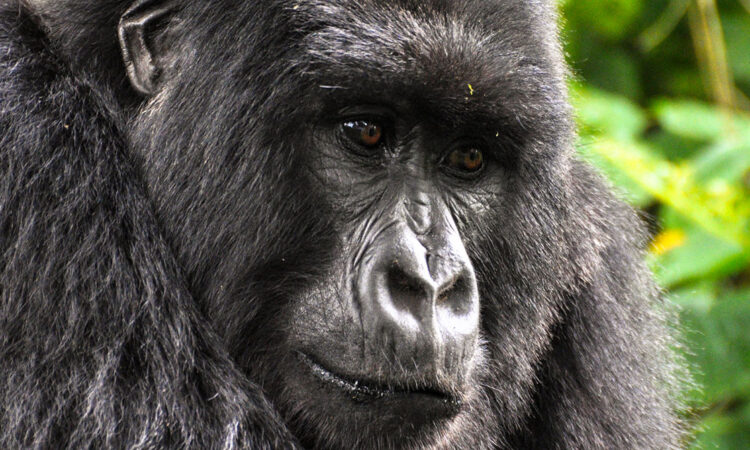
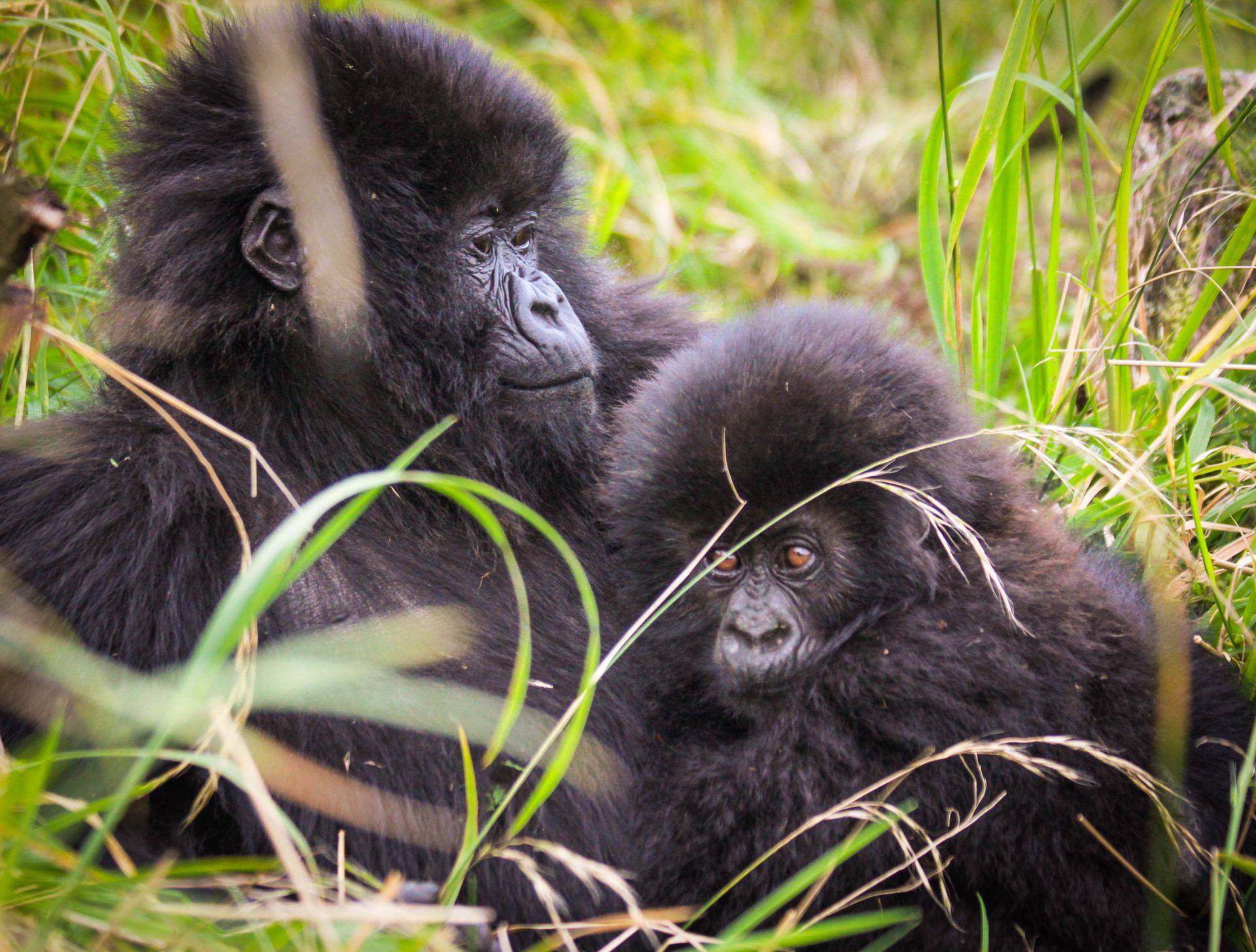
In comparison to other great apes, the mountain gorillas have longer and thicker fur that enables them to live in their unfavorable natural environment where temperatures sometimes even drop below freezing point. Humans are identified by unique fingerprints and interestingly, these Apes are identified by nose prints exceptionally unique to every individual.
Mountain gorillas are pre-dominantly terrestrial and quadrupedal with longer arms than legs. Males have standing height of 5-5 ½ feet while for females is about 4 feet when standing. A fully grown male gorilla weighs between 120 and 190 kilograms while for female gorillas are smaller with weight of 70 to 100 kilograms. Silverback gorillas have more pronounced bony crests at the back and top of their skulls hence making their heads conical in shape.
An adult male gorilla becomes “silverback” because of the silver-grey saddle on its back and hip. This appears when he reaches sexual maturity at 13 years. Female mountain gorillas reach sexual maturity at 7-8 years. The gestation period of mountain gorillas is about 8 months and their average lifespan in the wild is 40 years.
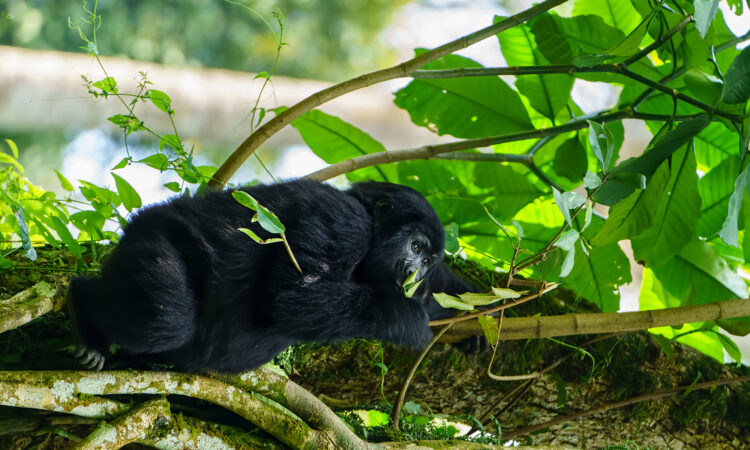
Mountain gorillas are diurnal and interestingly spend almost a quarter of their day foraging/eating and being herbivorous, their diet mainly comprises of bamboo shoots, flowers, plant leaves, roots, stems, barks, fruits and berries as well as snails and ants. A singe adult male gorilla consumed up to 30 kilograms of vegetation each day while the female gorilla can eat about 18 kilograms, and given this huge appetite their natural environment is the most favorable. When it comes to nesting, each individual makes a nest from surrounding vegetation and only young ones spend overnight in the same nest with their mothers.
Gorilla families and Silverbacks.
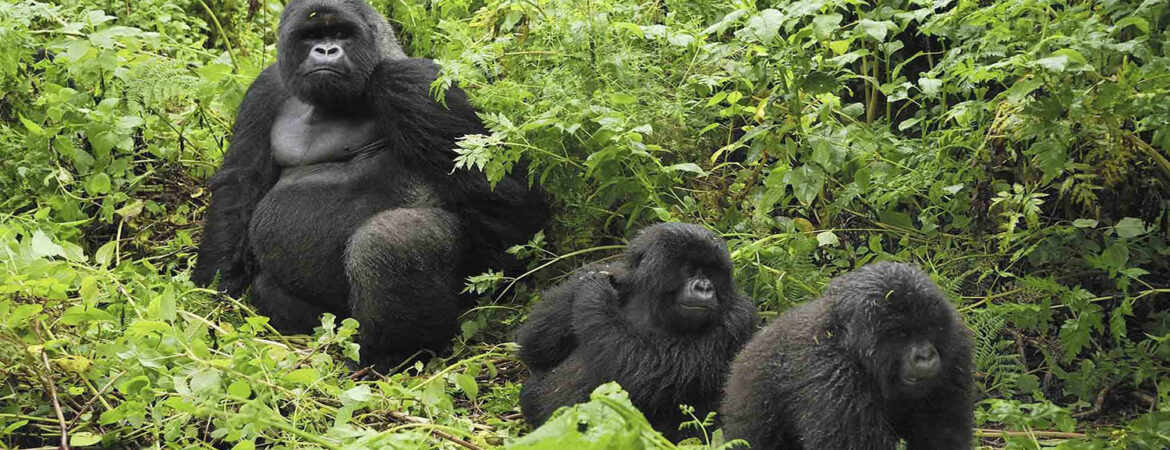
Mountain gorillas are generally social beings living in non-territorial groups, with a dominant and undisputed silverback gorilla, subordinate silverbacks, juveniles, adult females, infants, blackbacks and other individuals. These groups usually comprise 5 to 30 individuals and sometimes even more. The dominant silverback makes vital decisions of the group such as where they forage and nest, meditates on group/family conflicts and most importantly protects his members from external threats like predators such as leopards, humans and other gorillas (lone silverbacks or other groups).
He is the only one with the privilege of siring young ones but even when mothers die or leave the group, he takes care of the abandoned infants. When blackbacks eventually become silverbacks, they leave their mother group either peacefully or violently and females also begin leaving their groups at 8 years to start new ones with lone males or joining already existing groups.
It is undeniable that mountain gorillas are huge, strong and powerful but they are surprisingly very shy and gentle. They only become aggressive and charge when faced with threats; when they encounter unhabituated gorillas, leopards and sometimes poachers. These Great Apes have over 25 different vocalizations, mainly for communication and interactions among individuals within their natural environment. Some such as screams and roars are used to alert other group members of possible threats.